 EN
EN  ES
ES  PT
PT  FR
FR 
Combatting Racism With Music
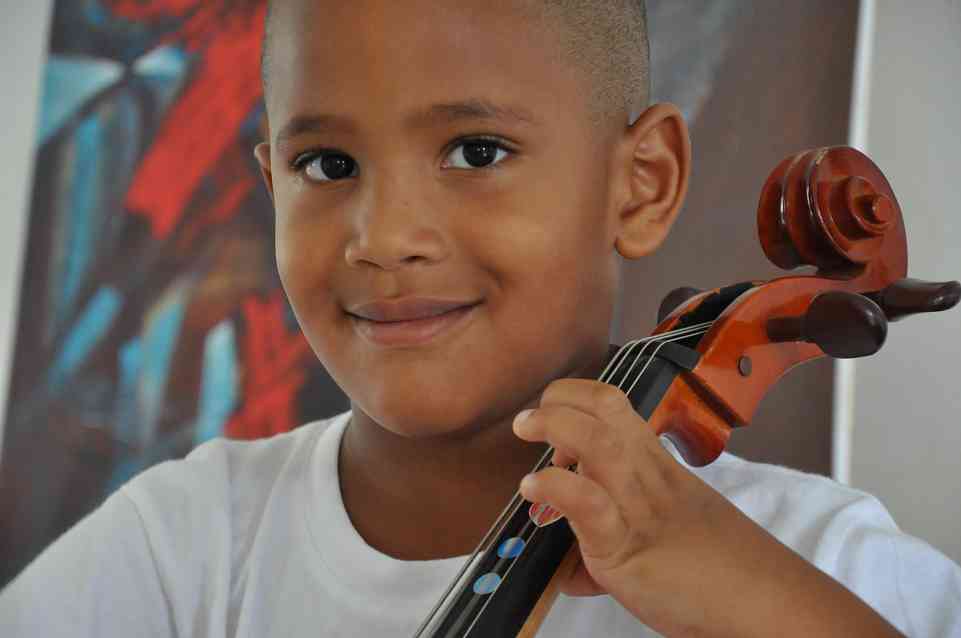
The Suzuki method can help us learn so much more than music. Making art can help counteract systemic injustices in our communities. I’m from the Antilles, a group of Northern Caribbean islands between the Americas that were colonized by France. The history of the Antilles is based on slavery, colonialism, abolition, and assimilation. These societies, structured by hierarchies inherited from the slave society, continue to be ridden with racism. Year after year, Guadeloupean children learn a “history of France” which leaves little room for their national novel and which does not correspond to their presence in the world. Even today, the recognition of this dark part of history is debated in France as many of its former colonies demand reparations for the crime committed through the long slave trade.
In Guadeloupe, those who need art the most are also those who are furthest from it. Art remains a domain reserved for those with privilege. The Suzuki method revealed itself to me as one response to fight against endemic racism through music.
Often, as a music educator in my culture, I am accused of being pretentious. Some say that music is synonymous with distraction and consider it an insignificant part of education. I would like to push back against this assertion. The Suzuki method can be adapted to the needs and expectations of every community. In my experience with Guadeloupe and Caribbean children, the common repertoire of the Suzuki method provides a universal language to all children who practice it. Musical literature should be an educational requirement, not an afterthought.
During one of my professional experiences in Cusco, Peru in 2010, Piano Teacher Trainer Flor Canelo did an extraordinary job emphasizing the importance of children studying their own musical culture. This experience, and the knowledge acquired during my years of studying Suzuki pedagogy, led me to search for a musical language suitable for Guadeloupe children.
I decided on the language of dance. Dance is a major part of the Guadeloupean culture, which students engage in at festivals and other celebrations each year. Dance celebrates the way each child evolves in a different universe and moves at their own pace. It allows us to reinvent ourselves for the better every day.
To supplement the Suzuki repertoire, I have written several works that are technically equivalent to the songs in books one through three. My goal is for children to understand the influences of other cultures and civilizations in our music and the relationship between popular music, classical music, and folklore as a form of musical expression. This method is a great way to consolidate the concepts of talent and heritage in our children and to break the barrier between popular and classical.
Singing and playing together means coexisting intimately. Thanks to the tools I have learned from the Suzuki pedagogy, I have created cultural centers that bring students together in the more sensitive areas of the territory. These places for meeting and rehearsal are open to all, with a particular focus on those who lack privilege. Many children come from immigrant backgrounds and are often not literate or enrolled in school, and would not otherwise have access to music education.
These spaces promote exchanges between parents and the rest of the professionals who have direct links with these families. There, they listen, speak, and gain access to resources that support the parent/child relationship.
The cultural centers create an environment conducive to a fulfilling arts education. They allow access to the arts for all, using the most exciting and effective pedagogy. They also restore students’ self-confidence. Another goal of the project is to divert young people in difficult situations from drug use and illicit activity. This behavior can have devastating effects on a student and family. Musical practice is a factor in academic success. I seek to reduce academic failure and aggressive behavior and encourage mutual aid and sponsorship.
I am grateful for the Suzuki method for providing the backbone to my mission of combatting racism in my community. Music education changes lives, which I have been lucky enough to witness one student at a time.