 EN
EN  ES
ES  PT
PT  FR
FR 
Mental Practice and Musical Memory: A Selected Review of Literature with Practical Pedagogical Implications
Introduction
In 1837, Clara Wieck performed a Beethoven piano sonata from memory on the concert stage. At the time, it was highly unusual to perform from memory, and even considered haughty (Mishra 2014). By the 1900s, performances from memory had become commonplace. In the 21st century, orchestral and chamber music performances are almost always given with the aid of notation, but the tradition of memorized solo performance for most instruments is strong, and often an expectation for soloists. Some reasons for the widespread desire for memorized performance are that it gives the impression of spontaneity, helps enhance artistic expression, and increases interaction between the audience and the performer (Ginsborg 2004, 123).
Since performing from memory is a standard part of the Suzuki Method, and is commonplace in many other pedagogical approaches, one might assume that the learning strategies to give a memorized performance would be well-established and agreed upon. However, there is much uncertainty, and even outright disagreement amongst professionals as to which types of preparation aid a performer, are merely a distraction, or might even detract from the ability to give a successful memorized performance. The lack of clarity as to what techniques aid memorization is especially relevant to performers who are moving out of their childhood years and into early adulthood—when the complexity of music being learned is usually increasing, the amount of available practice time is typically shrinking, and a person’s brain plasticity is decreasing. It is my observation that this moment in time finds many students experiencing performance anxiety and fear of memory slips to a degree that they never had before, and so it is especially important for them to have increased clarity on successful methods for musical memorization.
One such method is mental practice. While there are pedagogues who advocate strongly for its use (Gieseking and Leimer 1972, 11), I’ve observed that many teachers make little or no reference to it. Mental practice is defined as “the symbolic, covert mental rehearsal of a task in the absence of actual, overt, physical rehearsal” (Driskell, Cooper, and Moran 1994, 481). How does mental practice relate to memorized performance? Is it a useful tool? If so, how can its efficacy be maximized? Based on the abundance of research available, mental practice can be a very effective tool for preparing a memorized musical performance. Three research trajectories will be examined with regards to maximizing the effectiveness of mental practice in preparing for a memorized performance: psychological studies, evidence highlighting the importance of ear training, and case studies into practice techniques employed by experienced individual musicians.
Before examining the potential efficacy of mental practice as a tool to prepare for memorized performance, it is important to acknowledge that there are inherent problems with traditional, repetition-heavy methods of musical memorization. These include fatigue and even injury due to the physical strain of many, many repetitions. Depending on which study one looks at, overuse injury rates among serious musicians range from 26 to a staggering 93 percent (Bosi 2017, 16). As injury is, unfortunately, a prevalent concern amongst musical performers, prevention of injury is therefore of the utmost importance. One of the simplest, most universally applicable ways to reduce this risk of injury is to take regular breaks while practicing (Klickstein 2009, 12). While it seems that many trained musicians are aware of this need, injury rates still remain extremely high. Based on my observations, this is partially explained by the pressure to play at the highest standard with the shortest amount of preparation time, which can lead a musician to “play through the pain,” and ignore their body’s need for rest. Rather than working against the impulse for long, immersive practice sessions by insisting on a routine with mandated breaks (which may be ignored in times of stress), the incorporation of mental practice may allow a musician to remain completely engaged in their work while giving their body the rest it needs. The built-in physical rest that mental practice brings to a practice routine makes it a significant tool for combatting overuse injuries—a worthwhile consideration for any teacher, performer, or music student.
Inclusion Criteria
Documents included in the following review were limited to (a) studies published in peer-reviewed journals, (b) studies that allowed for flexibility in participants’ practice techniques, and (c) studies that added a significant conclusion not found in previous research. Additionally, a small selection of book chapters, non-music psychological studies, and online resources, are used to provide supplemental and supporting information.
Note that these inclusion criteria exclude studies where participants were instructed to play straight through the music such as Ross (1985), and Coffman (1990). When participants are required to play straight through the music to be learned in various conditions (mental or physical), the mental condition is necessarily placed at a disadvantage. This is because, as later studies show, mental practice typically works better when done in shorter bursts with a variety of techniques (for example, see Driskell, Copper, and Moran, 1994) due to potential confounding issues regarding attention and concentration in the absence of physical feedback. Thus, the results of studies with mandated run-throughs may not reflect the successes or failures participants would have had using mental practice in less restrictive settings and are excluded from the following analysis.
The Research
Lim and Lippman (1991) conducted one of the first mental-practice studies that also focused on successful memorization. This study was one of the first to give participants flexibility in how they were allowed to prepare the assigned musical material (with a time limitation), as opposed to prior studies, where a fixed number of practice trials was set. “This alternative . . . was intended to accommodate subjects’ different practicing styles. Some may prefer few slow repetitions, whereas others may prefer several repetitions at a faster tempo” (Lim and Lippman 1991, 24).
Even given this flexibility, the subjects using mental practice were solidly outperformed by those using physical practice. The lack of success of the participants using mental practice may offer an insight as to why so many musicians don’t make consistent use of mental practice: because long blocks of continuous mental practice (participants were given ten minutes) by the inexperienced prove inefficient when compared to physical practicing.
A 2008 study by Cahn took a different approach to examining the effectiveness of mental practice. It was specifically designed to evaluate the effectiveness of different ratios of mental and physical practice. Four test conditions were assessed: all physical practice (PP), all mental practice (MP), 33%PP/66%MP, and 66%PP/33%MP. The total practice time in this experiment was three minutes, and the amount of material being learned was a short chord progression. Every participant was asked to do the experiment twice, learning an “easy” and a “difficult” progression. This study differed from Lim and Lippman (1991) insofar as the mental practice sessions were short, and two of the four test conditions used interspersed mental and physical practice.
For the easy chord progression, participants had a similar amount of success for all four practice conditions. However, for the difficult progression, the more physical practice participants engaged in, the better the results. To explain this difference, Cahn concluded that proficiency in an activity is important when one is engaged in its mental practice, as it is difficult to accurately mentally represent something that an individual is unfamiliar with.
Contrary to this finding, Driskell, Copper, and Moran’s 1994 meta-analysis of non-musical mental practice studies found that mental practice can be useful for novices as well as experts. The authors explained that the effectiveness or lack thereof of novices’ mental practice is based on whether they have “the component motor skills” necessary to perform a task, and not whether they are expert at the actual activity (Driskell, Cooper, and Moran 1994, 489). For example, someone inexperienced at swinging a cricket bat, when asked to mentally represent the action, can draw on similar kinaesthetic sensations associated with another activity they are experienced at, such as swinging a tennis racquet. It is possible that there is a difference between musicians and those working in other fields (such as sports), because the “component motor skills” for musical execution are so specific. A participant who had to mentally represent more complex finger combinations used in the “difficult” piano chord progression in Cahn (2008) may have had too few similar experiences to draw upon. It is possible, therefore, that expertise is more important when mentally practicing a musical activity than a sport or other activity.
An additional finding from Driskell, Cooper and Moran (1994) sheds light on the different levels of success from mental-practice participants in Lim and Lippman (1991) and Cahn (2008). They conclusively found that short mental practice sessions are significantly more effective than long ones. The participants from Cahn (2008) who had only three minutes of mental practice time compared fairly well to those practicing physically, whereas those in Lim & Lippman, who had a full ten minutes, were significantly outpaced by those practicing physically. A further study by Iorio et. al. demonstrated that mental and physical practice combined produced stronger memorization in subjects, even after a period of days without playing the piece anymore (Iorio et. al. 2022, 238).
Mental Practice and Ear Training
The following two experimental studies point to the importance of a firm background in ear training skills for those engaging in mental practice. Highben and Palmer (2004) examined musicians’ ability to memorize music under four conditions: Practicing normally, practicing without hearing the sounds produced, hearing a recording while not moving the hands, and pure mental practice. There was a general trend of worsening success across the four conditions as listed. Highben and Palmer were especially interested to see how subjects’ motor-imagery and ear-training abilities correlated with their mental practice success, so they administered surveys to assess participants’ relative strengths in these areas. While the motor-imagery scores had no relationship with mental practice success, the ear training scores were significantly correlated. Participants with higher ear training abilities had no change in success between regular physical practice and the condition where auditory feedback was removed, and were nearly as effective when practicing in a purely mental fashion. This lies in sharp contrast to participants with poorer ear training abilities, who suffered greatly when auditory feedback was removed, and were nearly incapable of learning the music with pure mental practice. Highben and Palmer therefore concluded that a strong ear training background may be critical if one is to successfully employ mental practice.
Bernardi et al. (2012) assessed the relative success of combined mental and physical practice versus physical practice alone. This was one of the first studies to track the specific types of mental practice that participants were using. They did this by administering post-test surveys. By correlating the answers on the surveys with participant success, they found which mental practice techniques produced better memorization results. Formal analysis and auditory imagery—the use of audiation—were strongly correlated with superior memorization. On the contrary, subjects who employed visual imagery as a mental practice strategy had poorer results. Moving fingers, harmonic analysis, and singing during mental practice had neither a positive nor a negative effect on successful memorization (Bernardi et. al. 2012, 283).
Psychologist researchers have recently focused several studies on the mental practice and memorization strategies employed by an individual performing musician, as opposed to groups of subjects. Davidson-Kelly et al. (2015) examined a master class session run by pianist Nelly Ben-Or, and found that Ben-Or advocated complete memorization before even beginning to play a piece of music, called “total inner memory.” This is achieved through intense analysis and audiating the music without the instrument. Her approach also emphasizes visualization of kinaesthetic sensations, i.e., what it would feel like to play the piece one is memorizing.
Overwhelmingly, the participants in Ben-Or’s masterclass found that employing this intense version of mental practice enhanced their ability to perform. While participants new to Ben-Or’s methods struggled at first, over time, they all showed improvement using mental practice; reporting reduced physical tension while performing and a greater ability to emotionally connect to their memorized music during performance. These results pointed to students having more security in their memorized performance as a result of the use of mental practice.
Another study of an individual musician documented pianist Gabriela Imreh as she worked in preparation for a memorized performance of “Clair de Lune” (Chaffin 2007). Working over a relatively short period of time, Imreh had four general sections of practice: scouting-it-out, segment-by-segment work, putting-together, and polishing. An important detail noted in this study was that the length of the sections of music she tackled varied widely depending on the type of practice. The length went from very long for scouting, to very short for segment-by-segment work. The sections got much longer for putting-it-together. At the final stage, polishing, she was either working on very small sections (touching-up), or running large sections or sometimes the whole piece.
Discussion and Pedagogical Implications
The study in which participants using mental practice were outperformed by those using physical practice (Lim and Lippmann, 1991) sheds light on why so few musicians regularly employ or teach mental practice techniques: When inexperienced mental practicers attempt long, uninterrupted mental practice sessions, they don’t improve as significantly as when they engage in a similar amount of physical practice. Many musicians consequently conclude that while mental practice may be effective, it is simply an inefficient use of time.
However, it is clear from further research that mental practice can be very useful if done correctly and is especially useful when memorizing a piece of music. Several factors determine whether a musician has success in employing mental practice techniques. Mental practicing is most effective in short bursts and is ideally interspersed with physical practice. Mental practice is preferably used at points in a learning progression where work is done on small sections, as opposed to long run-throughs. A musician wishing to use mental practice in their practice room should find times in their routine when they could intersperse mental and physical practice in short segments, such as when doing section-by-section work in a new piece of music, or when polishing a tricky section in one already learned. If a classroom teacher wishes to utilize mental practice with a group of students, they will have the most success if they isolate a small section of music and allow their students to go back and forth between mental work and physical practicing (see below for exercise examples).
The two factors to primarily focus on during mental practice are audiation (sound) and kinaesthetic representation (feeling). In order to audiate internally to a degree of precision that will make mental practice useful, the skill must be trained and developed. This training is usually called “ear training.” Bernardi et. al. (2012) and Highben and Palmer (2004), highlight the critical need for a solid ear training foundation as a prerequisite to memorizing music in any manner other than physical repetition. Therefore, the patient development of a musician’s inner ear should be a continuing focus for all players and teachers.
Internal audiation and mental practice imparts an additional benefit to the musician preparing for memorized performance. Practicing effectively away from the instrument—and the sounds it produces—provides insulation against the pitfalls of serial-chaining memory. Serial-chaining memory occurs where playing one phrase provides a needed recall cue for the next one (Kageyama 2016). This is reminiscent of old-fashioned Christmas lights on a serial circuit: when one lightbulb dies, the rest of the chain goes dark, as every subsequent lightbulb depends on the previous one’s completed circuit. With serial-chaining memory in music, the musical “dead lightbulb” is a small glitch in the performance which compromises the sounds and feelings to which the performer has become accustomed. If a performer has always practiced with auditory and physical feedback coming from an instrument—physical practice—their memory is trained to need very specific audio and sensory cues to get from phrase to phrase. This means that an unexpected note or distraction during phrase A can eliminate a needed memory cue for phrase B, resulting in complete memory failure and a derailed performance. Developing a solid, internal aural picture—a natural outcome of using mental practice in the memorization process—significantly enhances the ability for an individual or ensemble to bridge the small gap created by a mistake, and successfully continue the performance.
The effectiveness of different mental practice training techniques is one area that remains insufficiently explored in the current literature. I would suggest that a study be designed where groups of musicians who are inexperienced at mental practice would be asked to memorize a piece of music using mental practice. They would then undergo a variety of mental practice training methods and memorize a second piece after the training. The differences in improvement between the groups could help identify more and less successful mental practice training techniques.
It is clear, however, that uninitiated musicians should be encouraged to employ mental practice despite initial difficulties, as it becomes more useful the more it is employed. The study of Nelly Ben-Or’s masterclass (Davidson-Kelly et al. 2015), while not necessarily prescribing the ideal way for all musicians to learn a piece, reveals the necessity for honing one’s mental practice abilities. While all of Ben-Or’s students eventually had success using her extreme, “total inner memory” mental practice approach, many struggled at first. If a performer or teacher wishes to truly make a judgement of how effective mental practice can be in their work, they need to first expend significant effort in developing and honing their or their students’ mental practice abilities. To this end, I have included a compendium of mental practice exercises designed for individuals and classroom teachers. The exercises listed are intended as a starting point for anyone wishing to begin to develop mental practice abilities for themselves or their students.
Exercises for Developing Mental Practice Abilities
Audiation exercises
Hearing sounds internally – In a group, the leader guides the others through the exercise.
- Pick a note that can easily be played on your instrument
- Play it on your instrument
- Now, hear it in your mind with as much detail as possible
- Play the note on your instrument again, and notice at least two details in the sound you missed in your mental representation the last time such as overtones, hissing, dynamic changes, etc.
- Hear the note in your mind again, but this time with the new details present
- Repeat steps 4–5 until the internal sound is rich with detail
- Now, just in your mind
- Vary the pitch by: hearing the note loud and soft, changing the sound to a different fingering (if applicable), audiating the note on different instruments, etc.
- Extension: try steps 2–7 with intervals, triads, and short phrases
Playing by ear – either alone or as a group
The ability to play by ear is correlated with greater audiation and mental practice success (Highben & Palmer, 2004)
- If alone
- Sing something from a piece you know by ear, but haven’t played before
- Play something from a piece you know by ear, but haven’t played before
- Loop a short section of a recording and play along as much as you can, a little more each time through
- If in a group
- One person plays a tune over and over, and the others join in with them as they can, a little more each time
- Loop a short section of a recording and everyone plays along as much as they can. The goal is to play a little more every time, even if the first time someone plays only the first note
Kinaesthetic Exercise
Practicing and feeling – In a group, the leader guides the others through the exercise.
- Sit down, keep your posture open and relaxed
- Close your eyes
- In your imagination
- walk into a practice room and notice its appearance
- See your instrument and walk around it—notice what you can see, hear and smell
- Reach towards your instrument and touch it. Notice the texture and shape of the area you are in contact with. Pick up the instrument (if applicable) and come to resting position
- Touch the playing surface
- Strings: silently glide your hand up and down the neck
- Winds and brass: silently finger the keys, or slide the slide
- Piano: silently glide your hands along the keys
- Intensify the exploration of the playing surface
- Strings: silently glide your hand up and down the neck and bounce your fingers on the strings. Direct your focus to different areas of your body
- Winds and Brass: feel the contact of the instrument with your mouth and breathe air through the instrument. Direct your focus to different areas of your body as you do so
- Piano: make different hand shapes on the keys – various chords etc., without actually making sound. Direct your focus to different areas of your body as you do so
- Repeat b)–e) physically, noticing and internalizing at least two kinaesthetic details (how it feels) that were not incorporated in your previous mental representation such as: texture, contact points, instrument weight, instrument width and length etc.
- Repeat a)–e) in your mind, incorporating the new details you internalized in the physical repetition(s)
- Continue alternating physical and mental repetitions until your mental representation is consistent, and rich with detail
Exercises Combining Audiation and Kinaesthetic Skills
Mental shifting/leaping exercise – In a group, the leader guides the others through the exercise.
- Choose a spot with a challenging shift or leap
- Play the arrival note(s) while focusing on kinaesthetic and auditory details
- Now play the note(s) prior to the shift/leap, and as you do so, imagine vividly—kinaesthetic and auditory—the note(s) after the shift/leap
- Shift/leap physically and play the arrival note(s)
- Note any kinaesthetic or auditory discrepancies between your internal representation of the arrival note(s), and the actual arrival note(s)
- Repeat steps 2–5 until the shift/leap is reliable
Fill in the Gaps – either alone or in a group
In memorized music, this exercise serves as a diagnostic tool for discovering the location of sections with the potential for memory slips. If the music is not memorized, it is a useful tool for developing audiation.
- Choose a section of a work that is already learned (memorized or not)
- Play every other bar out loud, leaving silences in-between
- During the silences, the performer(s) should internally audiate and kinaesthetically represent the missing music
- For faster or slower works, the length of the alternating performed/visualised chunks can be shorter or longer. For example, half a bar playing, half a bar silent for a slow work, or four bars playing, four bars silent for a faster work
Timed memorization – In a group, the leader guides the others through the exercise.
- Select a small amount of unlearned music that is comfortably within your/your class’s playing ability
- Play through the selection once: work out and write in any fingerings, bowings, or other notations as needed
- Without making any sound, spend 30–60 seconds memorizing as much of it as you can by internally audiating and kinaesthetically imagining the music
- Go back and forth between looking at the notes and looking away
- Play the excerpt by memory once as well as you/they can
- Note any gaps or insecurities
- Repeat steps 3–4 until secure
- Steps 2–5 should take no longer than 5 minutes. If they do, select a smaller or simpler excerpt
- Consider learning a larger selection by performing this exercise on consecutive sections
Conclusion
Mental practice can be a significantly useful practice tool for musicians, especially when used as an aid in memorizing music. However, not all mental practice techniques are equal in utility and outcome. It is clear from the research presented here that a musician’s mental practice should emphasize audiation and kinaesthetic representation. Several additional conditions should be met for mental practice to be maximally effective: ideally, musicians must cultivate their ability to concentrate while practicing mentally, engage in mental practice in short bursts, and intersperse mental practice sessions with physical practice. A critically important prerequisite skill for successful mental practice is audiation, the ability to hear music internally in the absence of external aids. To this end, the development of the inner ear through ear training should be a continuing focus for all musicians and teachers.
References
Bernardi, Nicolò Francesco, Alexander Schories, Hans-Christian Jabusch, Barbara Colombo, and Eckart Altenmüller. 2012. “Mental practice in music memorization: An ecological-empirical study.” Music Perception: An Interdisciplinary Journal 30, no. 3: 275-290.
Bosi, Bráulio. 2017. “The Reality Of INJURIES In A Musician’s Career.” American Music Teacher 67, no. 1: 16–20. https://www.jstor.org/stable/26387706.
Cahn, Dan. 2008. “The effects of varying ratios of physical and mental practice, and task difficulty on performance of a tonal pattern.” Psychology of Music 36, no. 2: 179-191.
Chaffin, Roger. 2007. “Learning Clair de Lune: Retrieval practice and expert memorization.” Music Perception 24, no. 4: 377-393.
Coffman, Don D. 1990. “Effects of mental practice, physical practice, and knowledge of results on piano performance.” Journal of Research in Music Education 38, no. 3: 187-196.
Davidson-Kelly, Kirsteen, Rebecca S. Schaefer, Nikki Moran, and Katie Overy. 2015. ““Total inner memory”: Deliberate uses of multimodal musical imagery during performance preparation.” Psychomusicology: Music, mind, and brain 25, no. 1: 83.
Driskell, James E., Carolyn Copper, and Aidan Moran. 1994. “Does mental practice enhance performance?.” Journal of applied psychology 79, no. 4: 481.
Gieseking, Walter, and Leimer, Karl. 1972. Piano Technique. New York: Dover Publications, Inc.
Ginsborg, Jane. 2004. “Strategies for memorizing music.” In Musical excellence, edited by Aaron Williamon, 123–141. Oxford: Oxford University Press.
Highben, Zebulon, and Caroline Palmer. 2004. “Effects of auditory and motor mental practice in memorized piano performance.” Bulletin of the Council for Research in Music Education: 58–65.
Iorio, Claudia, Elvira Brattico, Frederik Munk Larsen, Peter Vuust, and Leonardo Bonetti. 2022. “The effect of mental practice on music memorization.” Psychology of Music 50, no. 1: 230–244.
Kageyama, Noa. 2016. “Two Approaches to Memorization – One of Which Can Leave You Lost and Stranded if You Rely on It Too Much!” Accessed March 11, 2024. https://bulletproofmusician.com/musicians-seem-memorization-naturals-can-become-one/.
Klickstein, Gerald. 2009. The musician’s way. New York: Oxford University Press.
Lim, Serene, and Louis G. Lippman. 1991. “Mental practice and memorization of piano music.” The Journal of General Psychology 118, no. 1: 21-30.
Mishra, J. 2014. “Performing from Memory: Historical Roots.” Presented at The College Music Society Fifty-Sixth National Conference, St. Louis, Missouri.
Ross, Stewart L. 1985. “The effectiveness of mental practice in improving the performance of college trombonists.” Journal of Research in Music Education 33, no. 4: 221-230.
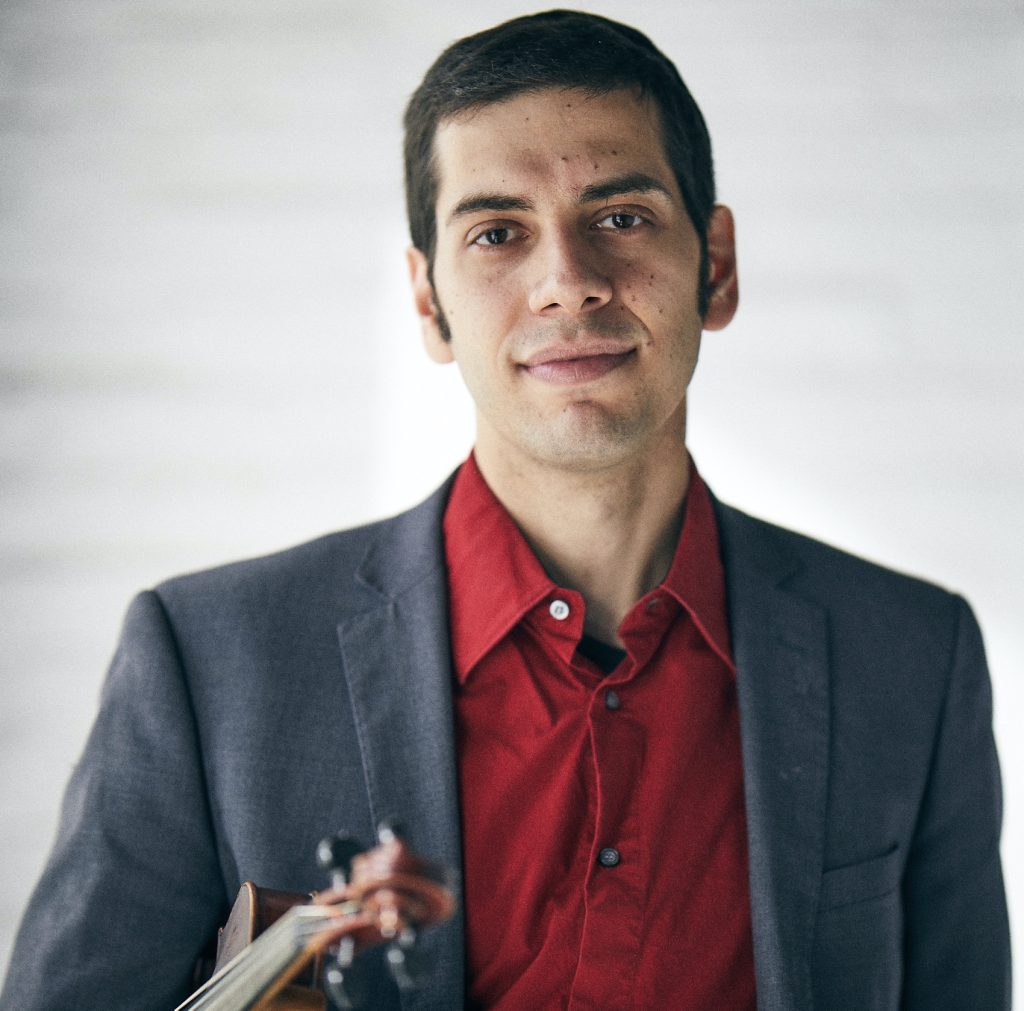
Assistant Professor of violin at Northern Kentucky University, William Herzog has been praised for “his deep understanding of the technical, psychological, and emotional aspects of violin-playing, and his ability to communicate this knowledge clearly and empathetically.” His pedagogical writing and presentations have been featured by ASTA, the Kentucky Music Educators Association, American String Teacher, American Music Teacher, and Strad Magazine, and he regularly receives invitations to speak at universities and high schools across the continent.