 EN
EN  ES
ES  PT
PT  FR
FR 
I (Also) Have A Dream: Expanding the Horizon of the Suzuki Community
I had the opportunity to attend my first ASTA/SAA Conference this year in Louisville, Kentucky. As I was planning to watch the many presentations, master classes, and participate in the networking meetings with my colleagues, I was amazed by this experience. In many instances, I already knew some of the musicians who were presenters and attendees whom I had met during my training courses in Chicago and online, among other online Suzuki events during the Pandemic.
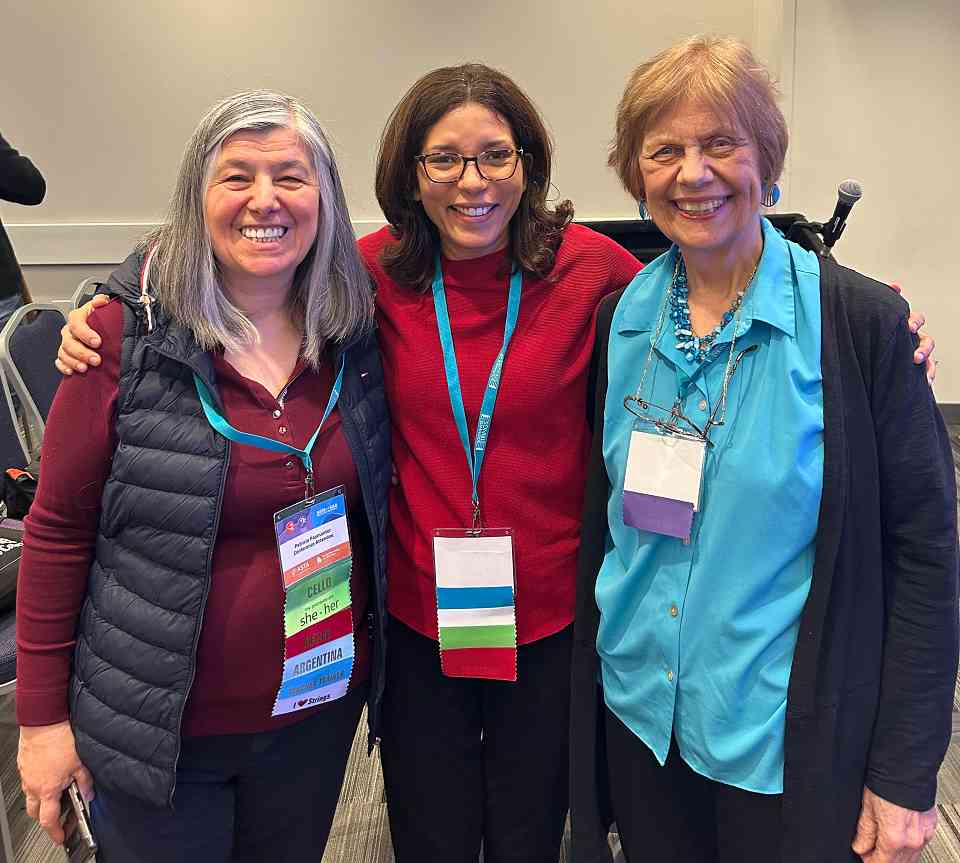
After four years of not having a conference, the amount of people who attended was unbelievable: over 3,500 attendees enjoyed the Suzuki and ASTA sessions. There were times that it was a challenge to choose which of these sessions I wanted to be part of! In the end, I felt that I accomplished much more than I ever imagined. It was all about networking! I was able to meet with other Suzuki cello teachers during our networking session, had lunch and dinner with teachers from St. Louis, or colleagues who worked there and moved to other places, many of whom I haven’t seen in many years; many of us felt excited and at the same time overwhelmed by the magnitude of this event. Nonetheless, it was worth making the trip.
During one of the networking meetings for Latin American Suzuki teachers, I had the privilege to introduce myself to some of the members of the SAA Board, including Kerri Williams (Chair), our Executive Director Angelica Cortez, and members of the Suzuki Latin American Committee. The only personal goal I mentioned to them is a dream: to bring the Suzuki community to my hometown Panama. Immediately, I asked myself, what can I do to be part of this Latin American Suzuki community? Is it possible to do it as someone based in the US? How can I bring the love and commitment to spread the Suzuki philosophy in my hometown? While I was continuing to ask these questions in my mind, we had taken pictures as a group, and enjoyed each other’s company.
This dream of bringing the Suzuki Method to my hometown Panama seemed to be almost impossible at times. However, my perspective changed completely after the Latin American network meeting. As I was telling Angelica about a chance to meet in Panama for a Latin American Suzuki encounter, all that I remember her saying was: “Let’s Do It.” Are you ready to follow my dream? First, you deserve to know a little more about my background.
When I started playing the cello, the only Suzuki-specific experience for me was playing Lightly Row and Allegro, among other pieces in a string ensemble group when I was eleven years old. Back then, I had no idea these songs belonged to a collection of Suzuki ensemble books that were used back in the 1990s in Latin America and abroad. My string orchestra teacher, Prof. Horacio Bustamante, taught me the principles of playing as a group, and that determined my destiny as an orchestra player. Years later, after studying at the Plan Juvenil (music school) and the Music Conservatory of Panama, I was hired to play at the Panama National Symphony Orchestra. Only at nineteen years old, I can say with certainty that my experience was very unique by playing many pieces from famous composers in a weekly basis.
Regardless of this wonderful opportunity, I already was a student of journalism at the University of Panama, graduating in 2004. I vividly remember the times when I still wanted to make a difference in my community, and I had the privilege of creating a youth orchestra from scratch, organizing rehearsals, auditions, selecting different conductors, and recruiting young players. The Orquesta Juvenil Istmeña was conceived in 2001 by a selective group of enthusiastic young musicians who only wanted to continue their sense of community by playing classical music. This orchestra continued to be active even after I played with the Panama National Symphony for six years, and departed from Panama in 2006 to pursue a Master of Music at Texas State University in San Marcos, Texas. In my late twenties, I still was eager to make a difference in my community, and I was able to build a consistent cello studio in San Antonio, Texas of over twenty-five cello students. It was really interesting that despite not having any Suzuki training (it had become almost impossible back then to attend any training sessions due to travel and financial constraints), I was called the “Suzuki cello teacher.” Months before I started teaching there, I was introduced more formally to the Suzuki Method by a dear violinist friend who sat me down “to teach me Suzuki Cello School Book One,” which was introduced to her by Carol Tarr back in Denver, Colorado. Years later, I took training courses with Mrs. Tarr herself!
After I got married in 2011, I moved to St. Louis, Missouri, my current home. Back then, I was more than ready to start my Suzuki cello training. Thankfully, I did the ECC course with Edmund Sprunger, and at the end of the session, he asked me: Are you ready to start going to Chicago? My answer was, “What is it in Chicago?” Now, I laugh about this answer as I was completely clueless about the community that was meeting every summer at Trinity International University in Deerfield, Illinois for many years. I started my training at CSI summer workshops almost consecutively from 2013 to 2021. In the meantime, I was still wondering about my true mission. As I completed training on all the Cello Suzuki Books, and decided to retake my training online most recently with Dr. Tanya Carey, I reflected on my future as I was writing for one of her assigned book reports on Hotta’s Suzuki: The Man & His Dream To Teach the Children of the World. All that I imagined was Dr. Suzuki in 1955 conducting thousands of violinists. How did this information arrive in the US? This was a revelation to me: it took many years for teachers here in the US to witness what Dr. Suzuki was achieving back in Japan, and it took more years to create the Suzuki Association of Americas.
Last year, I had a meeting online with a cello entrepreneur from Colorado who was interested to see if her foundation could offer sponsorship for teachers in Panama to receive Suzuki training in person or online. My task was to find out exactly the interest level of my fellow Panamanian musicians. Surprisingly, I was able to get updates and learned how they were affected by the Pandemic. In spite of all the difficulties, they were preparing for a new City for the Arts to be built. Many art institutions, including the Ballet, the “La Red” Orchestras (the national network of orchestras and choirs), our Music Conservatory, the Plan Juvenil, and the Panama National Symphony are finally established there. It truly sounds terrific: after its inauguration last month, this is perhaps the only news that I have received closer to my dream. These institutions had been apart for decades, and I could only imagine our musical community becoming stronger than ever thanks to their effort to make them more approachable.
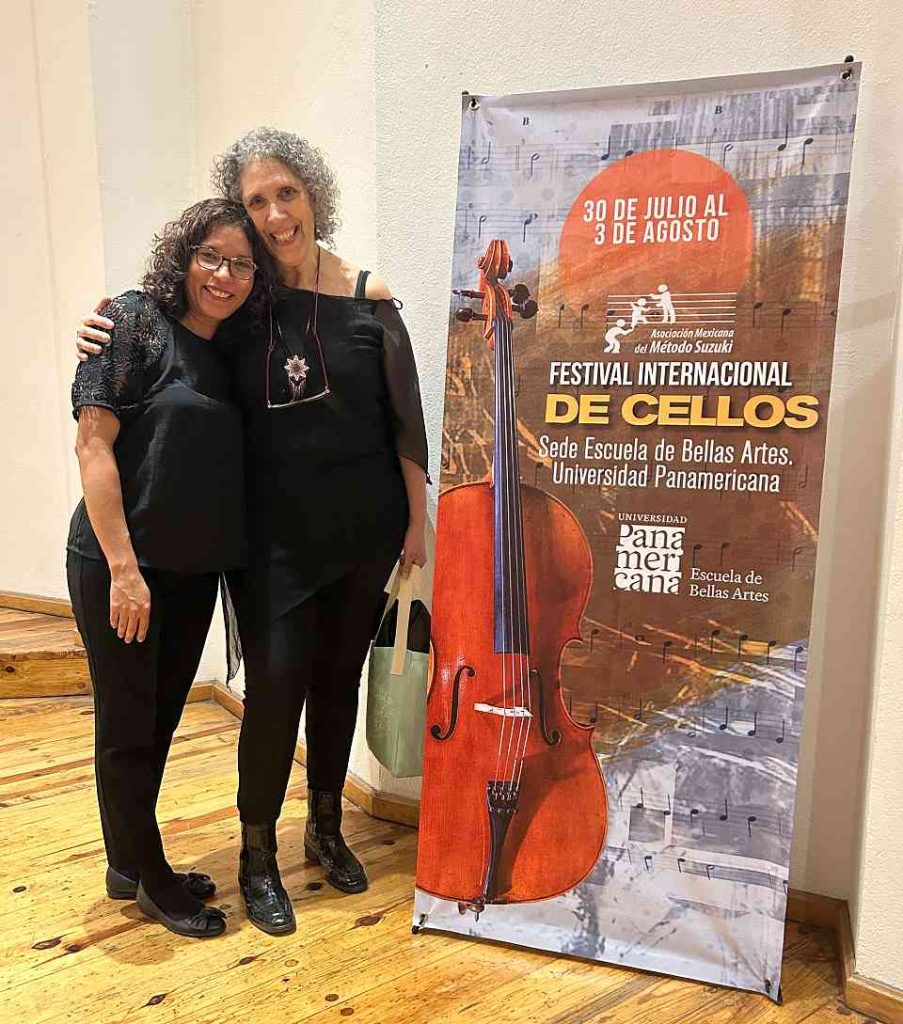
Why am I wanting so desperately to bring the Suzuki method to my hometown? The simplest answer is to expand even more the love for music instruction that Dr. Suzuki had created back in Japan, in the US, and the love that continues to grow in many other countries in Latin America. I had the privilege to travel to Mexico City last year to attend the International Cello Festival 2023, and my country is mentioned only because of my presence there. I participated and played in a cello choir with fellow Latin American and US cellists who reunited to learn from Dr. Tanya Carey, and from our only two Latin American Cello Teacher Trainers, Prof. Patricia Pasmanter, who recently relocated to Mexico City, and Prof. Andrea Espinzo from Buenos Aires, Argentina (the last two have become essential in my own Suzuki teaching education). I truly felt that I was living part of my dream already. I knew then that we were creating history in the Suzuki community in Latin America. This year, I’m planning to attend a Cello Festival in Santa Fe, Argentina in November and reunite again with more Suzuki cello teachers in South America.
My mission here in my current city, St. Louis, MO, is to also expand this sense of community. I have approached by email and in person some local cellists who have wanted to connect to share their experiences during their Suzuki training. I also have introduced myself to other legendary Suzuki members of our community to see if we can revive the same spirit that offers many more opportunities to reunite and share their expertise. Honestly, I believe I’m already doing community wherever I go. Now, the question is: would you be willing to see Panama as part of this community? My dream is also to expand in many other parts of the world. This dream is not that difficult if many of us are willing to expand our horizons and let ourselves take the leap. Just a cup of coffee with another colleague, a phone call, or attending more activities in our current programs can make a huge difference. I never thought in a million years that I was going to become an entrepreneur connecting with amazing people and spreading the same spirit to them. All we have to do is believe! And as Martin Luther King, Jr. said in his speech, “I have a dream that one day every valley shall be exalted, every hill and mountain shall be made low, the rough places will be made plain, and the crooked places will be made straight.” Even as difficult as my path to bring the Suzuki community to my hometown seems, I still have the dream that it could change for the best, and soon I hope it will be completed. I cannot wait for all my fellow Latin American colleagues to meet in my hometown and call it an “unforgettable encounter.” Panama has a logo: “Bridge of the World, Heart of the Universe.” I will encourage everyone to learn more about how amazing my hometown has been for years.
To all fellow Latin American colleagues, I ask you to contact me directly if you have similar goals. As a community, we can accomplish beyond the unimaginable. I’m an administrator of a WhatsApp chat group for Latin American Suzuki cello teachers in the US, as well as a member of the WhatsApp group for all Suzuki cellists in Latin America. Our conversations are solely to help each other in our teaching experiences. We could help in our own communities to expand the love for Suzuki, no matter where you live and teach. I see the whole Suzuki community as one. Coming to the conference reassured me of how real it could be: some of the Latin American teachers who work in the US are deeply interested in creating a chapter within the SAA in order to create community in the US and find ways to support our fellow colleagues in Latin America.
On the last day of the Conference, I was surprised to listen to “Cumbia y Congo” from Danzas de Panamá by William Grant Still. Both the Suzuki Youth Orchestra and the NOF High School Orchestra winners chose this number as one of their favorite pieces to be performed during the last concert. I came almost in tears to Kerri Williams, and we both knew how much these performances meant to me. Panama is calling me from everywhere, including my participation in this conference. Truly, I’m eternally grateful for this experience, and I hope that the same enthusiasm continues to persevere in our efforts to build a stronger Suzuki community in the Americas and the rest of the world.