 EN
EN  ES
ES  PT
PT  FR
FR 
Chair’s Column
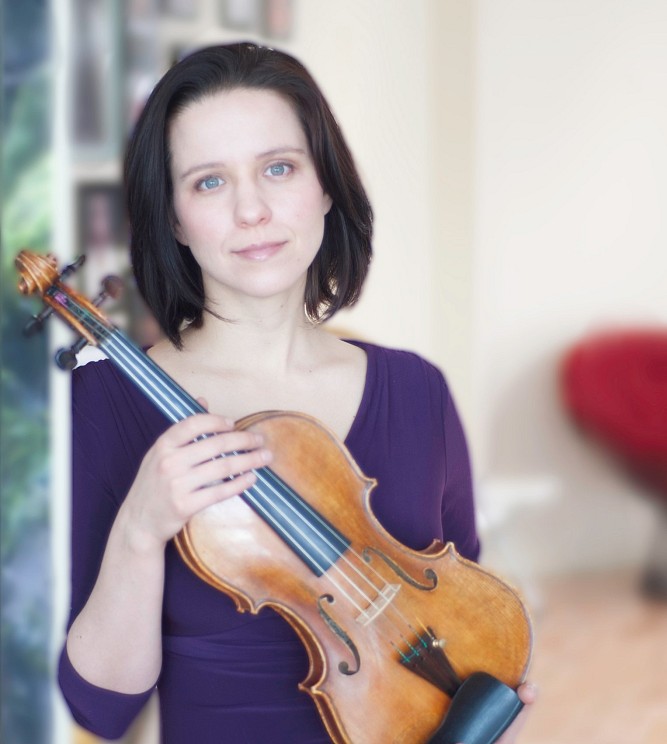
In Nurtured by Love, Shinichi Suzuki writes about educating children to “have a high sense of values, and splendid ability.” He describes the study of a musical instrument as a way to “develop these qualities.” Something that sets the Suzuki Approach apart from many music education methodologies is this dual focus on excellent musical training and development of the human spirit, with the latter being the ultimate goal. Therefore, being a Suzuki practitioner—anyone who puts Suzuki philosophy and principles into practice—often has far-reaching influences in one’s life and work.
The Suzuki Approach has certainly shaped how I approach learning new skills. About six years ago, I started regularly attending yoga classes. I liked the way yoga helped me find physical balance and groundedness. It introduced me to a different, more holistic way of relating to my body than I had encountered in classical music.
Perhaps because yoga was so new to me, it took a long time to learn the basics. Finding proper alignment in postures was (and still is) challenging. I had to reconsider the fundamental ways that I was holding my body and work to undo ingrained habits. At first, it was discouraging to discover how out of place my head, neck and shoulders were in a seemingly straightforward standing pose like Tadasana. I felt like I was not only starting from ground zero, but somewhere “below” that.
All of us have questioned our ability at some point. In Nurtured by Love, Suzuki describes his struggles and doubts when it came to learning the violin as an adult. However, he also presents the idea that “[a]bility is one thing we have to produce (or work for) ourselves.” Suzuki makes a compelling argument that one’s environment plays an integral role in ability development, and that everyone is capable of learning. He emphasizes the importance of repetition, consistency, patience and endurance in the learning process.
Those of us who are Suzuki practitioners have a keen understanding of the idea that Every Child Can Learn (and, by extension, so can every adult). We get to put this idea into practice every day. Each time a student overcomes a challenge or successfully acquires a skill through repetition, they are demonstrating their ability to learn. Students whose ability is consistently nurtured in lessons and the home environment develop into skilled musicians, one step at a time. It is quite a privilege—and a learning experience in itself—to be part of this process.
My teaching has shown me over and over again that Suzuki’s “formula” works. I knew that if I continued to show up to yoga classes and put in good practice, my ability would slowly increase. Suzuki compares the acquisition of ability to planting a seed and nurturing it consistently, even when we are not seeing immediate results or growth. To me, this dovetailed with the idea that yoga is about inner work, rather than external results.
After a lot of practice, I was more readily able to find that point of neutrality, where my head could balance properly on my spine. I began to appreciate the nuance and complexity of Tadasana, and learn more about other yoga postures and sequences, as well. A single posture has a lot to offer if one approaches it with the right mindset.
Yoga has added value to my life and challenged me in ways that have enabled me to grow stronger physically and mentally. It has also given me new perspectives on playing and teaching, and a new area of knowledge to pass on to the families I work with. It is not easy to be a complete beginner at anything. However, consistency and faith in the learning process can take us far.
This edition of the American Suzuki Journal looks at the ways in which practitioners of the Suzuki Approach apply its principles in their work and personal lives. Perspectives are shared by individuals on all three points of the Suzuki Triangle, with article contributions from teachers and parents, and insights from students. I hope you will join me in learning from what they have to share, and adopting some of their ideas into your own practices.
Sincerely,
Ellen Kogut