 EN
EN  ES
ES  PT
PT  FR
FR 
Trumpet Embouchure and Sound Production: Pedagogical Tips for the
By Dr. Sarah Herbert
Building a strong foundation of fundamentals is a philosophy valued by Suzuki teaching and brass educators worldwide. While the first lessons for beginning brass students typically focus on the essentials of breathing and moving air, learning correct formation of the embouchure is among the first necessary techniques presented to a beginning student. Immediate attention to training and strengthening the muscles of the embouchure will result in the ability to produce beautiful tone, one of the bedrock principles of the Suzuki philosophy. While the coordination of breathing and the embouchure is essential introductory instruction, this article will focus only on the aspects of teaching trumpet embouchure and strategies for approaching this technique with the youngest beginning students.
Similar to the Suzuki approach to other instruments, utilizing a smaller-sized instrument like a pocket trumpet often makes playing the trumpet more accessible for the smallest beginning students. Many Suzuki teachers choose to start children as young as four on this instrument and proceed to move them up to a cornet and finally a full-sized B-flat trumpet as they are physically able.
Regardless of the size of the trumpet, or the player, the most challenging part of introducing a brass instrument to a beginner is learning how to vibrate and strengthen the muscles of the embouchure. The vibration of the lips is the most important aspect of playing a brass instrument because this is what ultimately produces sound. These vibrations are facilitated by the embouchure. It takes patience, dedication, and practice over time to simply produce a sound on the instrument, never mind a beautiful sound. As a result, this initial period of learning can be extremely trying, especially compared to other instruments such as the piano, in which one can produce a sound through the touch of a key. The first several weeks of practice may not even require the instrument at all. The focus must be on the vibration of the lips which then progresses to buzzing the lips on the mouthpiece in order to make sound. It is essential that the student build an understanding that the embouchure for a brass player is like the reed to a woodwind player and must become an efficient vibration center.
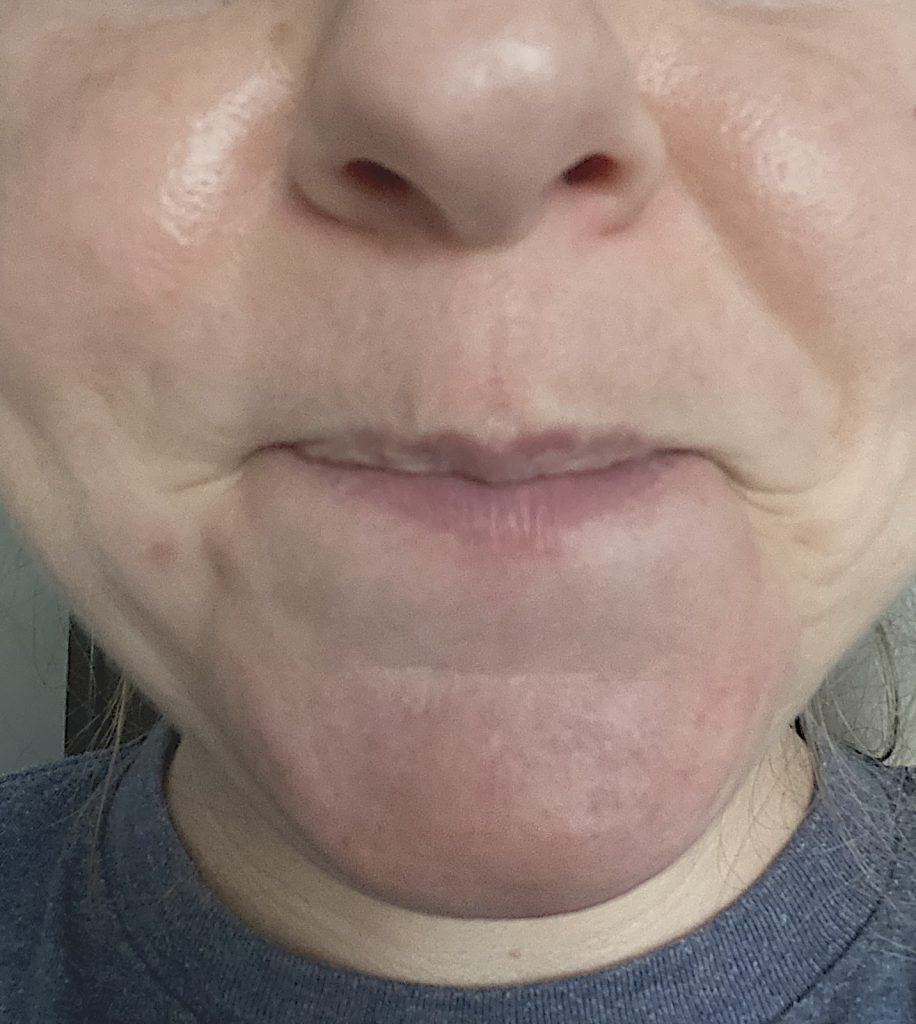
The most common method for introducing trumpet embouchure is to utilize the syllables “emm” followed by “poo.” The “emm” sound helps create the basic togetherness of the lips and firming of the corners of the mouth. The “poo” sound causes the center of the lips to touch and locate the vibration center. To supplement these two syllables, a gentle rolling in of the lips must also be employed as well as a flattening of the chin. Of course, these verbal instructions are much more effective when paired with a picture or live representation of the correctly formed embouchure. Figure 1 demonstrates a well-formed embouchure, and resources such as David Hickman’s Trumpet Pedagogy and Phillip Farkas’s The Art of Brass Playing provide many photos of professional trumpet and brass player embouchures. Photographic representations are extremely helpful for students to better visualize what the embouchure should look like.
[img=https://lh5.googleusercontent.com/AsPVwKak4WtWcWji5W9aHFU4xEoSQQTy4b_e5vP_OITQ78ozryR5bjQw1776U2uA4NHHf6wl1VJmDQuqgKsCllCTA4eGSa_OP-m6vPxN31RZGc-EMPU30fn1N3VRRM2WO18Lw9G00Lox-MWjY5ub3xU]
Figure 1. A well-formed trumpet embouchure.
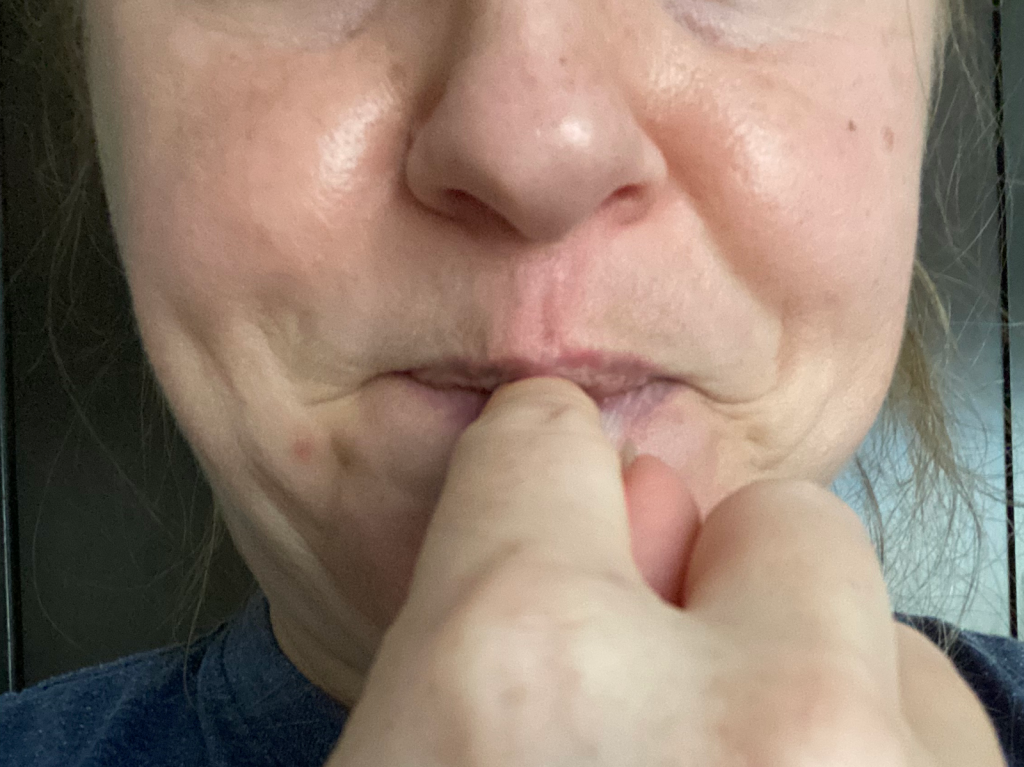
Despite the most well-meaning explanations, accurate instructions and visual prompts may not always produce the desired embouchure results. If this is the case, there are many troubleshooting strategies. For example, using a more tactile method of explanation can allow the student to “feel” more closely the correct placement of muscles. Have the student place their index finger between the center of the lips and in front of the teeth. Then, firm up the lips around the index finger as if “biting down” on the finger with the lips. Freeze the muscles in this position and then remove the index finger. The resulting position is typically a well-formed embouchure (fig. 2).
[img=https://lh3.googleusercontent.com/28iPz0QeRSPdAv6_MIkO1TppFUxF_JO9aRabkjM7yRGSh4Jg-Tv7nGsZg5O5lYJNy4h9Op2rucPpJ-fiM183mcVfkWV2FuqAz-O2QzyyAWlKMU0dHoyxEvL3ijqePRlg_USSw-UcJatqzzgQs6eZncw]
Figure 2. A tactile method for producing a beginning trumpet embouchure.
Another essential method for troubleshooting the embouchure is to practice in front of a mirror. It is very common for a student’s mental perception of muscle placement to be different from what they are actually doing. Working with a mirror will help align feelings with visual results. The student should compare the way their embouchure looks in the mirror with a photo or teacher’s example on a consistent basis in every practice session for the first several years of development.
Lastly, it’s worth noting a few of the most common errors in teaching beginning trumpet embouchure. The first occurs when there is confusion between a true vibration of the lips and a spitting sensation. A spitting embouchure will often cause a beginning student to produce a poor and undefined sound. Detecting this in beginners is critical because it is also a symptom of incorrect embouchure. Making a spitting sound uses the inner portions or red fleshy sections of the lips. A correct embouchure, however, uses the middle section of the lips just before they turn fleshy and moist. This section of the lips will allow for a “clean” vibration that does not have the tension of a spitting maneuver.
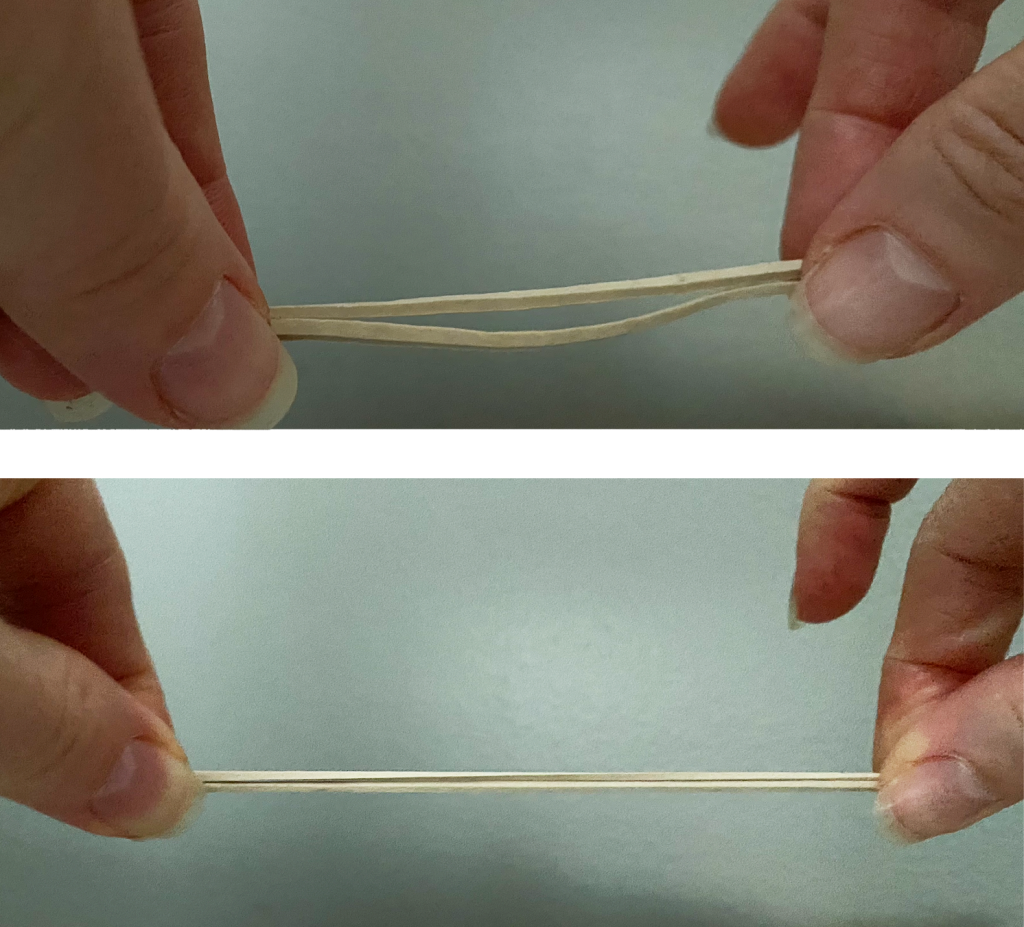
A second common error relating to the spitting-vs-vibration issue is the balance of tension and suppleness in the embouchure. To create vibration, there must be a certain amount of looseness in the lips to allow for the vibration to occur. If the center of the lips is too tight, little or no vibration can occur. This concept is a regular source of beginner confusion. Typically, a spitting sound occurs because the student is pursing their lips too tightly, preventing vibration. Imagine a rubber band held on both ends, stretched as far as it will go (fig. 3, lower image). If the middle is plucked at this high tension, the rubber band is at risk of breaking. However, if the band is not stretched as far, the center will vibrate when plucked (figure 3, upper image). The firmly held ends of the rubber band represent the tension of the corners of the embouchure. This analogy demonstrates the balance of tension and necessary looseness in the embouchure.
[img=https://lh3.googleusercontent.com/s6XL3BrXxLzdnWUX9BSt3fHck06rfn2tZmb814CHaR-POmynBBBgT4E152Ug95sryiYS4Q4qMWasMCM30n6gPuGewCEEQTAHCTo7Iyb0XS8uPaS5TkRqYtNl1PvDqIHBVoEdtcus9JgvR-HuJimEPS8]
Figure 3. Using a rubber band to illustrate the amount of tension in the embouchure. The upper image has an accurate amount of tension, allowing for vibrations to occur.
Much like the violinist learns to critique and perfect their bow hold over years of playing and practicing, the trumpet player pays close attention to the embouchure throughout their playing career. The vibration of the lips projects into the mouthpiece which in turn projects through the trumpet creating the most important aspect of the instrument: beautiful sound. These foundational principles will enable the youngest students to set up a healthy embouchure and continue with productive and exciting playing for years to come.
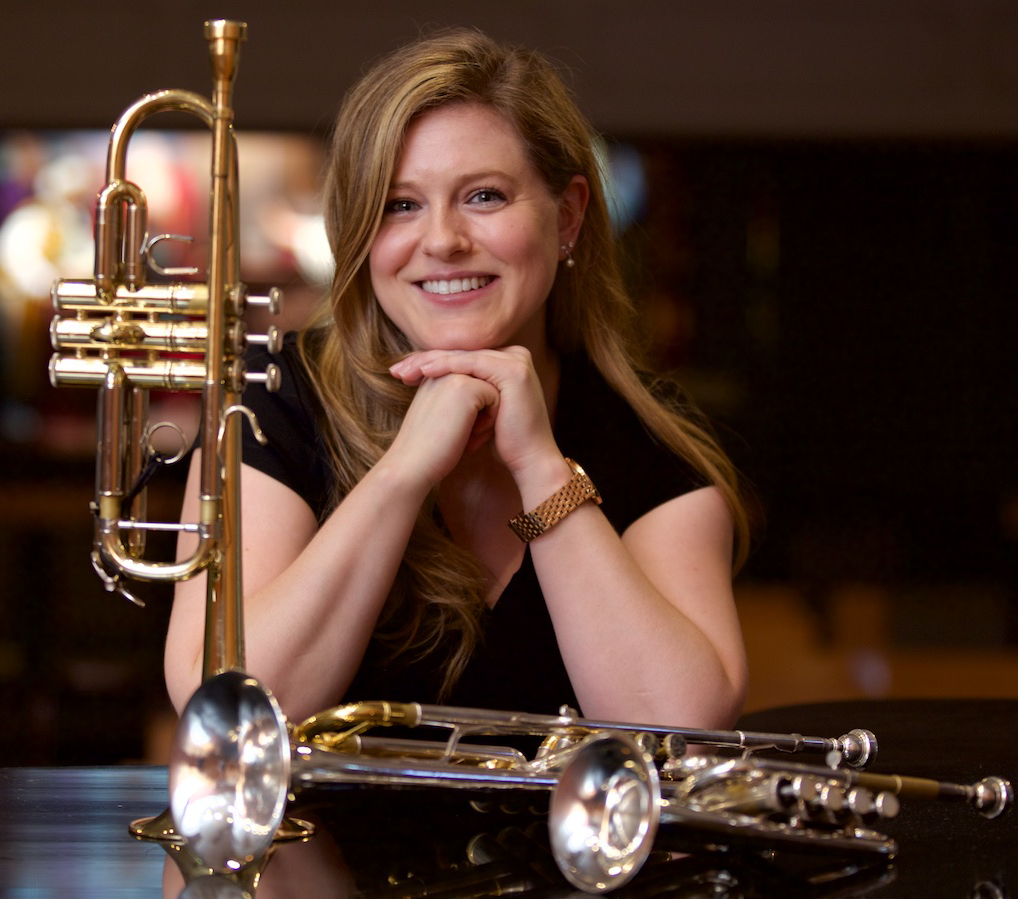
Dr. Sarah Herbert is the Assistant Professor of Trumpet and Jazz at Western Kentucky University. Most recently, she has performed with Orchestra Kentucky, the Gateway Chamber Orchestra, the Western Kentucky University Faculty Brass Quintet, and the Evansville Philharmonic. Dr. Herbert holds a Doctor of Music in Trumpet Performance from the University of Cincinnati College-Conservatory, a Master of Music from the University of New Mexico and Bachelor of Music in Trumpet Performance from the Indiana University Jacobs School of Music.
[img=https://lh6.googleusercontent.com/KLcsxmDij3bQwbgpNbPqA9mJ_T7FBr2vj7hUQc1KNXdbGulZlEmNCEicyzAJHInwWPw52Vz2NWJaMEJRDzDQylt6A_7–1jcY_OUx0b-F8qj4lu7yrI_kbaF3wnXRhacJ5WtGnFS6hVvO6tuYkfxWk8]