 EN
EN  ES
ES  PT
PT  FR
FR 
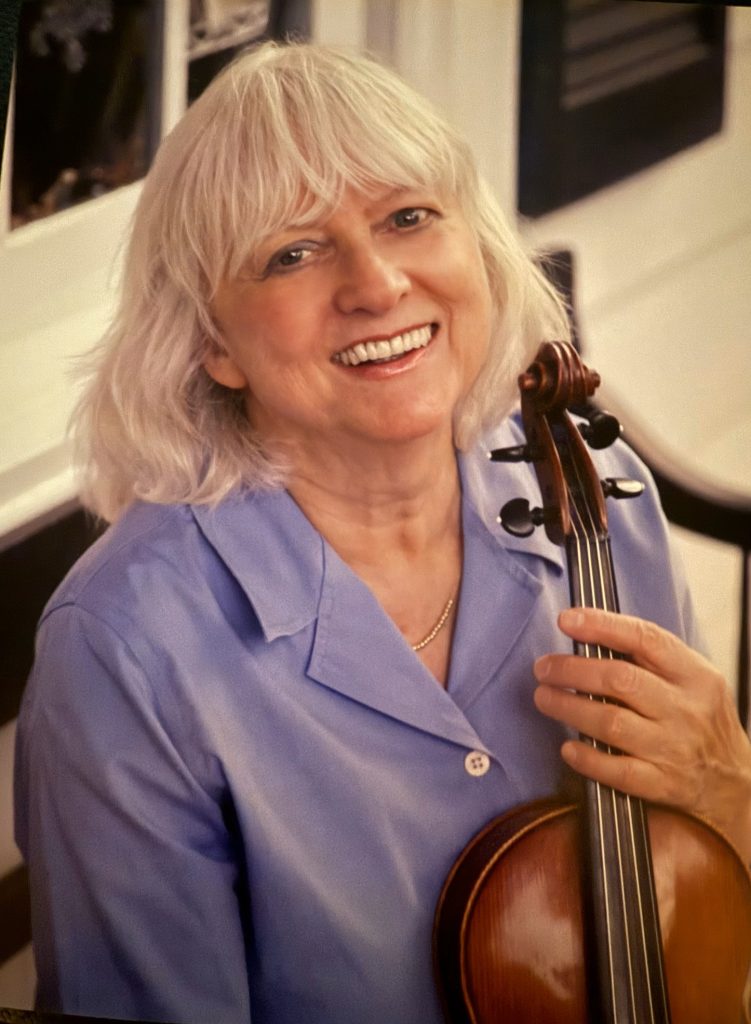
A compilation of memories from friends, students and colleagues:
According to Joanne Bath, 3-,4-, and 5-year-olds are some of the best artists because they are so unworried about what others think. As an example, Joanne often told the story of working with a 3-year-old for five months on getting her to open her arm to play Mississippi hotdog. When she finally got it, the child put her arms out wide and exclaimed, “This is a wonderful day! I can play Mississippi hotdog all by myself!”
What could be more wonderful and artistic than that, she said?
Joanne McMath Bath, 89, died peacefully on January 22, in Greenville, North Carolina, after a beautiful life filled with love, laughter, and music. Read about her amazing life through memories and histories.
“Joanne was able to see the potential in each person she encountered—student, teacher, friend—telling each one ‘you can do it.’ Her encouragement was empowering.”
“Joanne believed so deeply in the beauty of children and the inherent good in the Suzuki philosophy and just knew those beliefs would someday save the world.”
Growing up in Portland, Oregon, Joanne began violin lessons at the age of nine and never looked back. She received a Bachelor of Music Degree in Violin Performance in 1957, from Denison University in Granville, Ohio. Moving to Fontainebleau, France, afterward, she received a Certificate in Music from the Conservatoire Americain. Then returned to the U.S. and graduated in 1959 with a Master of Music from the University of Michigan.
Michigan is where Joanne met Charles, her husband of 59 years, while he was earning his piano PhD. They performed for 60 years as the Bath Duo, giving hundreds of recitals throughout the world.She and Charles moved to Greenville in 1966, and Joanne joined the ECU School of Music faculty in 1993. She served there as the Hardy Distinguished Professor of Suzuki Pedagogy until her retirement in 2021.
A renowned violinist, teacher, and adjudicator, Joanne was one of the first violin teachers in the U.S. to adopt the teaching ideas of Shinichi Suzuki in 1963. She called Suzuki’s teaching philosophy an approach not a method because he wanted teachers to tap into their own creativity and adjust in their own way to each student and family’s needs. This thinking was radical in its time and also how Joanne kept her teaching fresh.
Joanne’s fellow Suzuki teachers, many also former students, share memories of how Joanne spread the ideals of Suzuki’s beautiful philosophy:
Joanne Bath was a dear friend, colleague and promoter of all things wonderful about the Suzuki world. I met her in the 1970s and was immediately drawn to her and her positive outlook.
Like Dr. Suzuki, Joanne would have an idea and wouldn’t stop until she made it a reality. She was an incredible force for bringing out the good in people—and spread that force well beyond her own corner of the world. Just a few examples include being the driving force to launch the N.C. Suzuki teachers’ retreat to bring us all together and learn from each other. As an early institute director who witnessed the rapid creation of new U.S. institutes, she saw a need for a handbook to support other directors—so made one. This “just do it” attitude was only one of her amazing characteristics.
Joanne always put a positive spin on every situation. To turnaround a parent with a challenging attitude, she gave them a job. She felt we all wanted to be needed and part of the bigger community, which would make everyone happier. She did everything in her power to use the positive aspects of music to help mankind.
I met Joanne and Charles as an ECU student in 1966. Joanne gave a talk about her recent exposure to the Suzuki Method from John Kendall. I never forgot her passion for this beautiful method, so once I had young children—with Joanne’s guidance—we became a Suzuki family. After following her to institutes as a teacher trainee, my wife and I became two of the first N.C. Suzuki Institute faculty where we taught for more than 20 years.
Joanne used her magical perspective to make those first impossible years of living in un-air-conditioned dorms, eating in an un-air-conditioned basement cafeteria with football players and cheerleaders after their practices. She was also responsible for the many opportunities I had teaching at other institutes: Stevens Point, Snow Mass, Fairbanks, Sweet Briar College, Emory and Henry, and more.
Joanne was the inspiration for many monumental decisions of our young lives, as teachers and parents. We devoted our lives to the Suzuki philosophy, mostly due to Joanne’s inclusive, heartwarming, and “never say quit” attitude.
Meeting Joanne in the violin section of the East Carolina University orchestra as a freshman in 1966 was a turning point in my future as a teacher. Encouraged by Joanne to join her and her daughter Tricia at the Institute at Catholic University in 1978, I took book one teacher training with John Kendall and my life was forever changed. A phrase that best describes my dear friend and mentor is from Emily Dickinson: “I dwell in possibility.”
Joanne began planting the seeds of a Suzuki program in Greenville. A program she’d spread that would transform the city, state and country. She dwelled in the possibility that “every child could learn” as she set out on her path to change the world one child at a time, beginning with her own.
As the director of the N.C. Suzuki Institute, she thoughtfully paired each student with the teacher she felt best fit, believing in everyone’s possibilities. She dwelled in the possibility that every single thing could be a teaching aid: a wooden stir stick for practicing bow holds to a toilet paper roll for cultivating a straight bow stroke. She also encouraged camaraderie among the faculty by hosting parties at her home. Her Swedish roots were evident in every corner of the house and the pale blue of the Swedish flag was her favorite color to wear all the way down to her clogs.
One of my highlights in my 28 years teaching there was hearing Charles and Joanne perform on the faculty recitals. To this day, whenever I hear a Brahms violin sonata, I think of them.
As founder and director of the North Carolina Suzuki Institute for almost 40 years, Joanne taught and spoke around the world. In addition to membership in many local and statewide professional organizations, she served on the Board of Directors of the Suzuki Association of the Americas from 1991-1995, and as the SAA National Institute Chairman from 1995-2001. Joanne received numerous awards and distinctions throughout her professional career, including the North Carolina Governor’s Award in Music in 1996, and the Suzuki Association of the Americas Distinguished Leadership Award in 2002. In 2016, Joanne was honored with a Celebration of 50 Years for her musical service to the Greenville community.
A Celebration and Thanksgiving for Life Service will be held at 2:00 pm on Friday, February 7, at St. Paul’s Episcopal Church in Greenville. Memorial contributions may be made to ECU Foundation (attn: ECU School of Music), St. Paul’s Episcopal Church, Cypress Glen, or the Suzuki Association of the Americas. Online condolences and LiveStream information may be found at www.wilkersonfuneralhome.com.
“We will all miss her, her periwinkle and pink outfits, her beautiful smile, her faith in humanity, her love for all children, her positive way of going about her life, and her dear, sweet demeanor.”
