 EN
EN  ES
ES  PT
PT  FR
FR 
The Benefits of Joining a Community Music School Suzuki Program
Community arts schools are just one way to obtain a strong Suzuki education for your child. Prevalent in many parts of the country, community arts schools often provide important benefits that can enhance your child’s educational experience beyond the actual lesson instruction.
One of the most important benefits of school-based programs is community. Joining a program at a school often provides families with a built-in network of administrators, teachers, parents, and other students. This network can support the learning process in many ways. Quite often, students are motivated and inspired by their peers. From informal hallway chats to structured group activities and shared recitals, students learn and grow from these interactions in ways that can be more organic and intuitive than structured lessons. It’s fun to share one’s experiences and skills with others working toward a similar goal. Parents benefit from the advice and help of other parents who are also working through a similar process and struggles. Administrators can serve as an additional source of knowledge, advice, and support. Institutions very often partner with the larger surrounding community creating even greater opportunities for sharing and connection. These human relationships are often the most important part of growth through the arts.
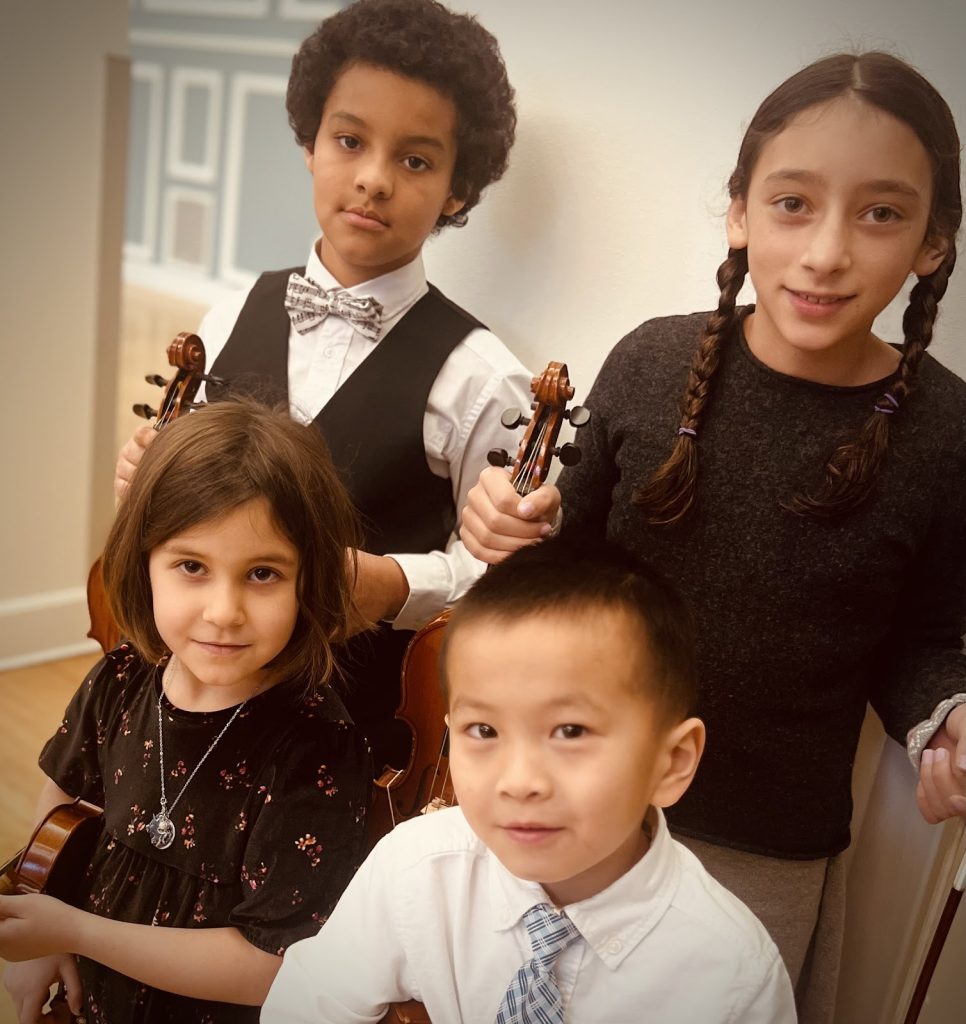
[img=https://lh4.googleusercontent.com/YQmqMBy3E4keghBp37VCKS3PKnZd05YhcsvVzsDcsVec9x3coUWjEBlblRb8i5seinKpLNbQRkgW7BUtJq_XhaxhCrxcSu8aPSXO2BtaRG34CnBpTzsLPULnfG-mtY4nOXZvZ0K6bTfBqxQCHc-gmdY]
Several of the author’s current students at the Settlement Music School in Philadelphia.
Additionally, many community music schools offer a wealth of resources. From financial aid and scholarships to beautiful performance spaces, nonprofit schools work hard to make the arts accessible to all students. In terms of Suzuki specifically, school programs can often pool the studios of multiple teachers thus providing group opportunities for varying ages and levels. Ensemble opportunities abound at community music schools. Community music schools often also have large music libraries and instrument collections available to students and teachers. Teachers also gain from the shared knowledge that comes from being part of a larger department. For a private lesson teacher, a larger institutional community can provide support beyond the often isolating feeling of private instruction.
Community music schools afford a unique opportunity to incorporate many types of instructional styles, Suzuki being just one of many. Programs within larger schools often cross pollinate. For example, Suzuki students learn important basic ensemble skills through Suzuki group classes that can later be utilized and expanded upon in other types of ensemble programs. Additionally, many Suzuki students, because of their initial aural based training, naturally gravitate towards other aural styles such as folk, rock/pop, and jazz. Community music schools often have the breadth to be able to offer multiple styles all under one roof. Music lessons more readily become a family affair when there are many varying opportunities for all ages and levels in the same location.
Researching arts education options can often be a daunting task for parents new to the process. Assurances of credentials can be a challenging thing to both inquire about and trust. Schools assume that parents want to know about these credentials and welcome any questions you might have. Most schools have rigorous processes to ensure teachers’ credentials and are happy to share this information with parents. Many schools also diligently create curricula, evaluation processes (for both teachers and students), as well as accreditation of the school itself. These checks can help parents rest easy that they are in good hands.
Suzuki programs come in many shapes and sizes. Community music schools are just one way to obtain a high-quality Suzuki education for your child. Interested families should contact their local music school and ask for a tour and/or a trial lesson class, or observation.