 EN
EN  ES
ES  PT
PT  FR
FR 
Nurtured by Environment
Suzuki Early Childhood Education and the Science of Developmental Origins
By Aline Ananias de Lima
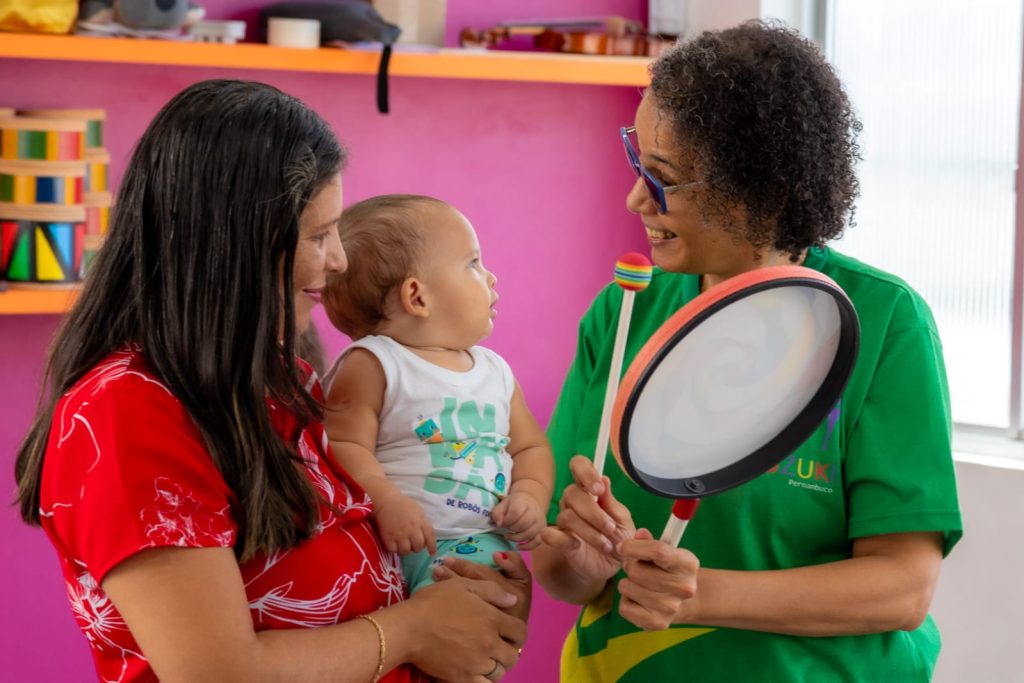
The biomedical sciences have consolidated the Developmental Origins of Health and Disease (DOHaD) framework, which demonstrates that early life environments, beginning during gestation, shape health, cognition, and emotional well-being across the lifespan. Maternal stress, nutrition, and sensory experiences alter neurodevelopment and stress physiology, resulting in lasting effects. Coming from a non-medical standpoint, Shinichi Suzuki, decades earlier, declared: “Man is a son of his environment.” His pedagogy, emphasizing immersion, repetition, and parental participation, anticipated these scientific insights. As I will argue in this article, Suzuki Early Childhood Education (SECE) embodies DOHaD principles, offering musical enrichment as developmental care that bridges health sciences with pedagogy.
The DOHaD Framework
DOHaD posits that prenatal and early postnatal exposures exert lasting effects on physiology, cognition, and behavior. Its findings are wide-ranging; below are several that are particularly relevant to Suzuki educators. Nutrition in the first 1,000 days calibrates metabolic and neurocognitive trajectories, predicting both cognitive development and cardiometabolic health.¹ Studies on breastfeeding and micronutrient supply highlight long-term educational benefits.
Maternal stress during pregnancy influences temperament and later mental health through neuroendocrine and inflammatory mechanisms.² Reducing maternal distress improves self-regulation in infants, pointing to causal links. Epigenetic studies reveal that early experiences leave methylation signatures on genes regulating stress and neuroplasticity,³ shaping how individuals respond to future challenges. Sensitive periods of brain development further demonstrate that enriched input during infancy—language, rhythm, and social interaction—optimizes cortical specialization, while deprivation raises risk for dysregulation.⁴ Enriched, predictable, and emotionally secure environments buffer stress and enhance learning, making them modifiable determinants of lifelong health.⁵
Music as Developmental Care
Among enrichment forms, music occupies a special place as both sensory and emotional input. Fetuses perceive melodic contours, and this continuity into infancy supports recognition and regulation. Music engages multiple systems simultaneously—auditory, motor, mnemonic, and affective—producing broad developmental effects. Controlled studies in neonatal intensive care show that structured music stabilizes vital signs and promotes cortical connectivity in preterm infants.⁶ Longitudinal studies link early musical routines to vocabulary growth, literacy, and executive function.⁷ Beyond cognition, music enhances socioemotional bonds: singing to infants strengthens attachment and scaffolds empathy, while group music fosters cooperation and prosocial behaviors.⁸ Music’s multimodal nature—combining rhythm, melody, movement, and emotion—makes it uniquely potent as developmental care.
Suzuki’s Anticipation of DOHaD
Suzuki emphasized that every child can learn if immersed in an environment rich in stimulation, repetition, and kindness. His insistence on saturating the child’s environment with music anticipated findings that enriched contexts promote learning and resilience. Structured repetition, central to his pedagogy, aligns with evidence that daily practice strengthens executive functions such as working memory and inhibitory control.⁹ Suzuki’s emphasis on kindness coupled with high expectations parallels developmental research on authoritative parenting, which shows that children flourish when warmth and support are combined with consistent guidance. This predicts emotional regulation and prosocial development.¹⁰ In this way, Suzuki emerges not only as a music educator but as a precursor to developmental science.
Suzuki Early Childhood Education (SECE)
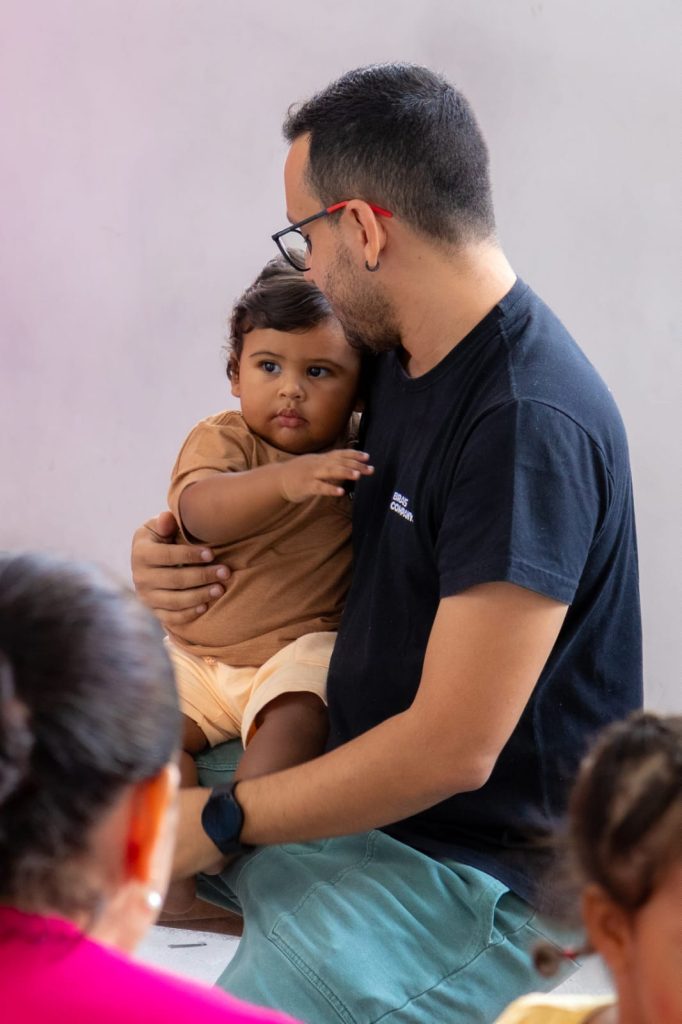
SECE operationalizes Suzuki’s principles in a curriculum for infants and toddlers. It is not early instrumental training but a developmental framework in which listening, singing, rhythm, and parental involvement function as daily nourishment for growth.¹¹ In SECE classrooms, songs and rhymes are repeated joyfully with movement and gesture, embedding learning in multisensory contexts. Parents participate alongside children, modeling engagement and creating a culture of shared music-making.¹² The International Suzuki Association recognizes SECE as the first international early childhood curriculum within the Suzuki philosophy, adaptable across languages and cultures.¹³
Vignettes from practice illustrate these dynamics: a six-month-old coos on a sustained note during a group song, and the response is celebrated as musical contribution. In another class, toddlers synchronize rhythms with wooden sticks, gaining confidence as parents mirror their actions. The gathering activity, rolling a ball to Mozart’s Eine Kleine Nachtmusik, becomes ritual, as infants learn to anticipate both the music and the joyful social exchange.¹⁴ Research at McMaster University showed that SECE participants improved communicative gestures, social development, and stress regulation compared to controls.¹⁵ Such outcomes confirm that SECE cultivates enriched environments in line with DOHaD science.
Bridging Public Health and Pedagogy
The convergence between DOHaD and SECE shows how biomedical knowledge can be translated into pedagogy. Neuroscience confirms that early auditory and social experiences calibrate stress physiology and shape neural circuits.¹⁶ SECE enacts these principles through routines of repetition, parental involvement, and relational joy. In public health, developmental care refers to reducing stress in vulnerable infants; SECE extends this model into communities, requiring no equipment beyond trained educators, caregivers, and a musical repertoire.¹⁷ Policy discussions on early childhood increasingly highlight integrated approaches linking health, education, and equity. SECE exemplifies a cross-sectoral strategy: strengthening families, reducing inequalities, and supporting school readiness.¹⁸
Limitations
At the conceptual level, integrating Suzuki’s pedagogical writings with biomedical research presents challenges. The ideas proposed by Suzuki were expressed in a manner consistent with philosophical discourse, while DOHaD is firmly rooted in empirical scientific principles. The observed variations in the methods and languages employed by these traditions render their convergence as a heuristic phenomenon rather than a literal one. Nevertheless, this complementarity offers a productive lens through which to examine the issue. Suzuki’s predictions regarding the fundamental principles of science have only recently been substantiated with remarkable precision. Future research should emphasize longitudinal, cross-cultural designs with validated developmental metrics.¹⁹
Conclusion
Shinichi Suzuki’s proposition that “Man is a son of his environment” foreshadowed the consensus of DOHaD that early environments exert a profound influence on developmental trajectories. SECE offers a comprehensive approach to developmental care by providing a structured framework that is adaptable to different cultural contexts. SECE is predicated on the integration of artistic and scientific concepts, education, and health through the incorporation of repetition, parental involvement, and kindness into daily routines, thereby creating a bridge between theory and practice. Although the body of evidence remains under-explored, SECE offers a compelling illustration of how Suzuki’s philosophy finds congruence with contemporary developmental sciences. Moreover, it presentes a pragmatic, scalable approach to nurturing human potential from its earliest stages. Subsequent investments in research could serve to consolidate the impact of SECE and explore its potential to promote more effective early interventions.
Notes
1. H. Als, “Newborn Individualized Developmental Care and Assessment Program (NIDCAP): New Frontier for Neonatal and Perinatal Medicine,” Journal of Neonatal Nursing 15, no. 1 (2009): 8–13.
2. V. Glover, “Prenatal Stress and Its Effects on the Fetus and the Child: Possible Underlying Biological Mechanisms,” Advances in Neurobiology 26 (2020): 17–31.
3. M. J. Meaney, “Epigenetics and the Biological Definition of Gene × Environment Interactions,” Child Development 81, no. 1 (2010): 41–79.
4. E. I. Knudsen, “Sensitive Periods in the Development of the Brain and Behavior,” Journal of Cognitive Neuroscience 16, no. 8 (2004): 1412–25.
5. M. M. Black et al., “Advancing Early Childhood Development: From Science to Scale 2.0,” The Lancet 398, no. 10296 (2021): 1030–45.
6. J. Loewy et al., “The Effects of Music Therapy on Vital Signs, Feeding, and Sleep in Premature Infants,” Pediatrics 131, no. 5 (2013): 902–18.
7. A. Habibi et al., “Music Training and Child Development: A Review of Recent Findings from a Longitudinal Study,” Annals of the New York Academy of Sciences 1423, no. 1 (2018): 73–81.
8. L. K. Cirelli and S. E. Trehub, “Effects of Interpersonal Musicality on Parent–Infant Interaction,” Developmental Science 23, no. 4 (2020): e12919.
9. B. S. Bergman Nutley and S. Söderqvist, “How Is Working Memory Training Likely to Influence Academic Performance? Current Evidence and Methodological Considerations,” Frontiers in Psychology 8 (2017): 69.
10. D. Baumrind, “Effective Parenting During the Early Adolescent Transition,” in Family Transitions, eds. P. Cowan and M. Hetherington (Lawrence Erlbaum Associates, 1991), 111–163.
11. International Suzuki Association, Framework for Suzuki Early Childhood Education (2014).
12. L. A. Custodero, “Singing Practices in 10 Families with Young Children,” Journal of Research in Music Education 54, no. 1 (2006): 37–56.
13. S. Suzuki, Nurtured by Love (1969; trans. W. Suzuki, 1998).
14. International Suzuki Association, Framework for Suzuki Early Childhood Education (2014).
15. D. Gerry, A. Unrau, and L. J. Trainor, “Active Music Classes in Infancy Enhance Musical, Communicative and Social Development,” Developmental Science 15, no. 3 (2012): 398–407.
16. V. Putkinen, M. Tervaniemi, and M. Huotilainen, “Informal Musical Activities Are Linked to Auditory Discrimination and Attention in 2–3-Year-Old Children,” European Journal of Neuroscience 37, no. 4 (2013): 654–61.
17. J. P. Shonkoff, “Rethinking the Definition of Evidence-Based Interventions to Promote Early Childhood Development,” Pediatrics 146, no. 3 (2020): e20193377.
18. P. R. Britto et al., “Nurturing Care: Promoting Early Childhood Development,” The Lancet 389, no. 10064 (2017): 91–102.
19. P. D. Gluckman and M. A. Hanson, “The Developmental Origins of the Metabolic Syndrome,” Trends in Endocrinology & Metabolism 15, no. 4 (2004): 183–87.
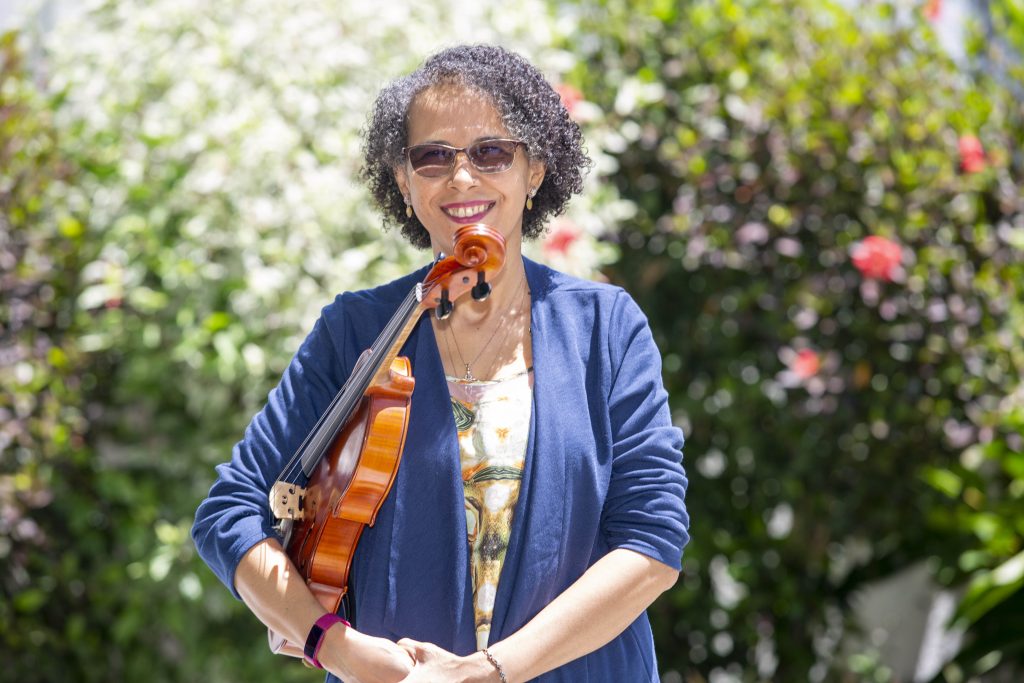
Aline Ananias de Lima is a violin and viola teacher, SECE educator, and founder of the Suzuki Center of Pernambuco, Brazil. She holds a Master of Arts in Music from Campbellsville University (USA) and a Master’s in Neuropsychiatry and Behavioral Sciences from the Federal University of Pernambuco (UFPE), where she is currently a PhD candidate. Her research focuses on music, early childhood development, and performance anxiety. Aline also earned degrees in Music, Education, and Letters, together with specializations in Neuroscience and Neuroeducation. Over the past decades, she has worked extensively with social projects that integrate music education and community development, in addition to her teaching activities in conservatories. Actively engaged in the Suzuki community, she served on the board of the Associação Musical Suzuki do Brasil (2020–2024) and is a member of the Suzuki Association of the Americas. Her work integrates music pedagogy with neuroscience to promote child development and family well-being.