 EN
EN  ES
ES  PT
PT  FR
FR 
“Reading” Music
How to Inspire Learning Before the Lesson Begins
By Wendy Hollon Henderson
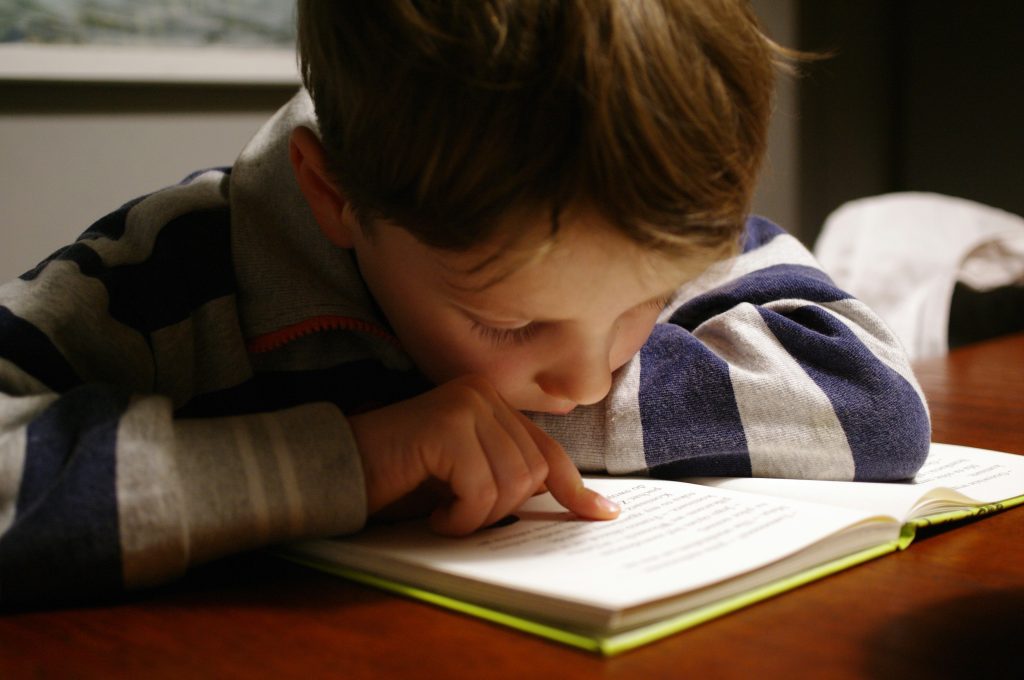
The small pocket of time a student waits before a lesson begins is an often overlooked and under-utilized time for students to be active learners. The addition of childrens’ picture books in the waiting area is one method to engage students before a lesson begins. Changing the way your students wait by having them read music-themed stories can inspire, motivate, and develop appreciation as they pursue their musical interests.
Reading sheet music and “reading” music-themed picture books use similar skill sets. Both require an understanding of basic symbols and sounds, knowledge of time and key signatures or phonetic rules, and lots of patience and practice. When done correctly, reading music translates into an understanding of a piece’s rhythm, harmony, and pitch to produce sounds that blend together and are pleasing to the senses. Likewise, reading stories and comprehending the text can generate emotional responses like empathy and understanding of others. That said, it’s not surprising that music-themed picture books are often well-received by educators and parents, suggesting strong sales. As a result, the use of music in children’s books is a favorite among authors and illustrators. Whether it’s the cadence of repetitive text, conflict, or an overarching theme, a well-known title such as Zin! Zin! Zin! A Violin by Lloyd Moss with its euphonious cadence and fun illustrations, is a delight to the senses. Taking a different approach, Mo Willems in his bestseller, Because, builds an emotional bond between reader and character, as he shows the influence of music on a young girl. It is a story of how chance, discovery, and persistence lead to a career in music, a career fostered by relationships and support from community helpers.

Like music, books are best when shared. When music-themed books are made available in your waiting area, they add a way for students to communicate their thoughts that can be an effective way for students to make connections with each other and promote community within your studio and beyond. The set-up is easy. All you need is a picture book with a music theme, sticky notes, a prompt or question, pencils, and a space to display the sticky notes. To start this process, select and read a music-themed book. Write a prompt such as “Which character did you most enjoy?” or “Draw your favorite part of the book.” Answer the prompt on a sticky note and when finished, place it in the designated area. Have a copy of the book available with a pad of sticky notes and pens. Explain the new waiting room “opportunity” in the lesson prior to starting. Composing a short email to parents explaining the purpose and directions may encourage participation.
“Reading” music is easy to implement and manage in a waiting area big or small. In under ten minutes or less, exposure to a great book just might inspire the next great composer, conductor, or performer. As Mo Willems writes in Becuase, “Because sometimes it’s the smallest moments that have the biggest impact.” Stay tuned for the second installment of this article, in which I examine how to foster connections between reading, libraries, and music schools.
Books for Your Waiting Room
Below is a brief annotated list of music-related books to include in your waiting room library.
Brown, D., & Batori, S. (2020). Wild Symphony. Puffin.
- Travel through the trees and across the seas with Maestro Mouse and his musical friends! Young readers will meet a big blue whale and speedy cheetahs, tiny beetles and graceful swans. Each has a special secret to share.
Garriel, Barbara Schmitz, & O’Brien, J. (2012). I Know a Shy Fellow Who Swallowed a Cello. Boyds Mills Press.
- An adaptation of the folk rhyme “There was an old woman who swallowed a fly,” featuring musical instruments.
Hayes, A. (1995). Meet the Orchestra. Houghton Mifflin Harcourt.
- This book describes the features, sounds, and role of each musical instrument in the orchestra.
Lithgow, J. (2011). The Remarkable Farkle McBride. Simon and Schuster.
- The musical prodigy Farkle McBride tries a number of instruments before discovering that conducting the orchestra makes him happy.
Mackesy, C. (2019). The Boy, the Mole, the Fox and the Horse. HarperCollins.
- A modern, illustrated fable for readers of all ages that explores life’s universal lessons from beloved British illustrator Charlie Mackesy.
Mcphail, D. (2012). Mole Music. Henry Holt.
- Feeling that something is missing in his simple life, Mole acquires a violin and learns to make beautiful, joyful music.
O’Connell, J. (2000). Ten Timid Ghosts. Turtleback Books.
- A witch tries to scare ten ghosts out of the haunted house where they live, but in the end, they play a trick on her.
Sullivan, S., & Root, B. (2011). Passing the Music Down. Candlewick Press.
- A boy and his family befriend a country fiddler, who teaches the boy all about playing the old tunes, which the boy promises to help keep alive. Inspired by Melvin Wine and Jake Krack.
Webb, S. (2005). Tanka Tanka Skunk! Scholastic.
- This book uses animal names to introduce rhythmic language and rhyme, as Tanka the elephant and his friend Skunk play drums to keep the beat.
Wenzel, B. (2016). They All Saw a Cat. San Francisco Chronicle Books.
- In simple, rhythmic prose and stylized pictures, a cat walks through the world, and all the other creatures see and acknowledge the cat.
Willems, M. (2012). Listen to My Trumpet! Hyperion Books For Children, An Imprint Of Disney Book Group.
- When Piggie plays her new trumpet for Gerald, the elephant decides he must be honest in his response.
Willems, M., Ren, A., & Purrington, H. (2019). Because. Hyperion Books For Children.
- A series of events, some seemingly very insignificant, lead to a young girl attending a life-changing concert.
Young, J. (2018). Play This Book. Bloomsbury Publishing USA.
- Illustrations and simple, rhyming text invite the reader to try various instruments and join a band.
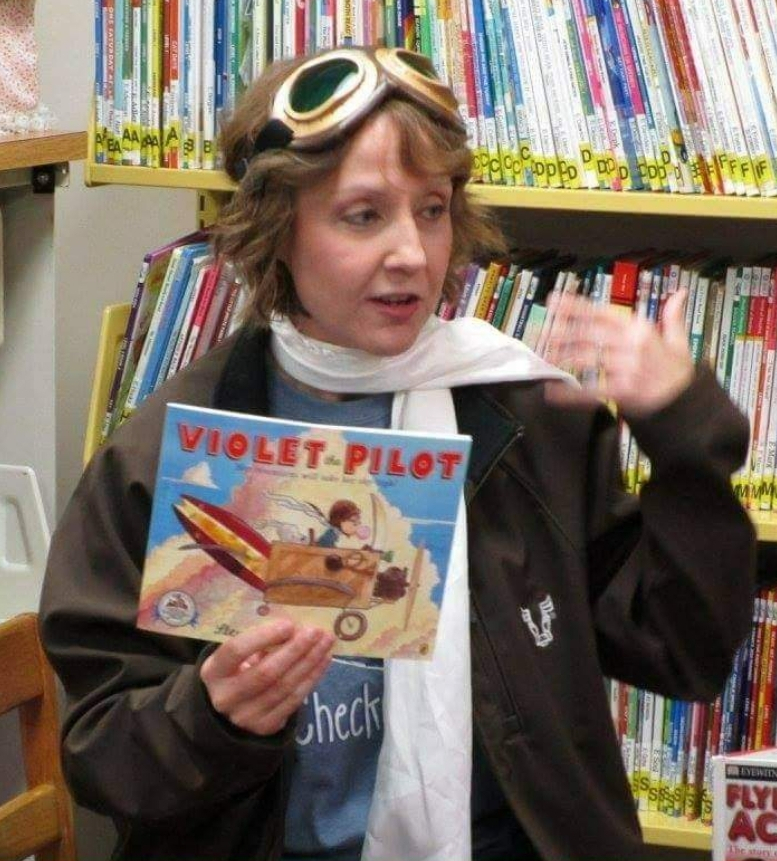
Wendy Hollon Henderson is a retired teacher librarian and full-time Suzuki parent. She is enjoying the Suzuki journey with her daughter Elle, a Violin Book Four student, at the WKU String Academy.