Skip to Navigation

Paul Salerni

View Author Profile

Articles 1–11 of 11

November 29, 2010 / Topics: , , /

Paul Salerni, former SAA Board Chair and Suzuki Dad introduces Parents As Partners Online, which will happen January 17 through February 28 on the SAA website.

Read more of Salerni Parents Promo »

May 1, 2007 / ASJ 35.3 / Topics: , /

Jung-Ho Pak

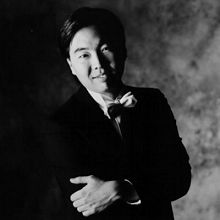
It is my pleasure to introduce new SAA Honorary Board member, Jung-Ho Pak. One of the most able and flexible conductors of his generation, Jung-Ho is a passionate advocate for reinvigorating classical musical audiences of all ages, and he works miracles inspiring young musicians to play in orchestra with both discipline and love.

Read more of Interview with Jung-Ho Pak »

May 1, 2007 / ASJ 35.3 / Topics: /

As an exercise in interdisciplinary collaboration during the next academic year, the arts community at my home institution (Lehigh University) will produce a festival entitled “Words/Music/Images: A Celebration of Convergence.” I like the phrase “Celebration of Convergence”—it describes my most recent Suzuki experience as well as one of my strongly held feelings about my soon-to-end experience serving on the SAA Board of Directors.

Read more of Chair’s Column »

February 1, 2007 / ASJ 35.2 / Topics: /

Paul’s Psychic Predictions for the middle of the 21st century:

Read more of Chair’s Column »

November 1, 2006 / ASJ 35.1 / Topics: /

As I finish the first of my two years as Chair of the SAA Board of Directors, I’ve been looking back at my experiences and what I’ve written about them and can find some recurring themes: connectivity, the balance of tradition and innovation, love.

Read more of Chair’s Column »

August 1, 2006 / ASJ 34.4 / Topics: /

Boy have I been having fun being the Chair of the Suzuki Association Board; this past spring was especially exciting. In April, the end of our third Board meeting of the year dovetailed with the Western Springs School of Talent Education’s 25th anniversary celebration at Symphony Hall in Chicago, so I was able to witness a beautiful concert by WSSTE faculty, students, and alumni in an historic venue. Congratulations to Ed Kreitmann, Tom Wermuth, Nancy Jackson, Sally Gross and all the staff at WSSTE a quarter century of excellence.

Read more of Chair’s Column »

May 1, 2006 / ASJ 34.3 / Topics: /

My compositional mentor was Earl Kim, the great Korean-American composer best known for the sparse brilliance and intense lyricism of his pieces. In my mind, I always connect Earl to my other musical idol, the brilliant, sparse, and intensely lyrical jazz trumpeter Miles Davis. Somehow, and this may seem far-fetched, I now connect these artists of strong conviction and high standards to the nature of the Suzuki Method. As Suzuki puts so much emphasis on the production of beautiful tone, both Kim and Davis spent considerable energy discovering their “sound” or “voice.” As is commonly reported, Davis worked hard to achieve and continually refine his immediately recognizable trumpet sound; Kim allowed very little of the music he wrote before the age of 45 to be performed because he did not feel he had yet discovered his unique compositional voice. Both Davis and Kim had a penchant for reductionism, that is, limiting musical variables in order to better concentrate on a singularly expressive idea.

Read more of Chair’s Column »

February 1, 2006 / ASJ 34.2 / Topics: /

I have had the good fortune to live for two extended periods in Italy, my ancestral homeland. Along side the joys one commonly associates with Italy—beautiful landscape, great food, amazing art, etc.—I was most affected by Italy’s penchant for maximizing human contact. Italian cities are designed to funnel their inhabitants to a central meeting place, and Italians are simply in the habit of gathering regularly in those centers to meet and converse with their friends. I had much more success reaching my Italian friends by simply going out for a walk than I did by making a phone call.

Read more of Chair’s Column »

November 1, 2005 / ASJ 34.1 / Topics: , /

In her closing remarks at the SAA Leadership Retreat in May, my esteemed predecessor as SAA Board Chair, Joanne Melvin, exhorted the Association’s leaders and members to continue to tell their stories. Since then, I have been in the enviable position of hearing many of those “stories”—stories about the history of the Suzuki movement, stories about its founders and early leaders in the Americas, stories from teachers about their challenges, accomplishments, and aspirations, stories from parents about their children’s adjustments to the musical world beyond Suzuki instruction. As a participant in the SAA Board’s discussions about the future of the Association, it is extremely helpful to hear these stories.

Read more of Chair’s Column »

August 1, 2005 / ASJ 33.4 / Topics: /

My name is Paul Salerni and I am the new Chair of the Board of Directors of SAA. Since many of you don’t know me, I thought I would spend the first part of this column introducing myself and sharing my history with the Suzuki Method. I am a Professor of Music at Lehigh University where I teach composition and theory and direct the new music ensemble called LUVME (The Lehigh University Very Modern Ensemble). Thanks to firm and trusted advice from my sister-in-law, I became a Suzuki parent in 1990. Both my sons studied violin with Linda Fiore and during a sabbatical semester in 1993 I took Suzuki viola lessons from Linda, joyfully reaching the end of Book 1. My oldest son Domenic has persisted with the violin, graduating from the Pre-College Division at Juilliard this past spring. He will continue violin study with William Preucil, Jr. and Linda Cerone this fall as a freshman at The Cleveland Institute of Music. My son Miles has become an excellent percussionist; moreover, the organizational skills and confidence instilled by the Suzuki Method have been an aid in his facing serious health challenges. Clearly, my children experienced great musical and personal growth as a result of the Suzuki Method in their lives.

Read more of Chair’s Column »

Board as Microcosm


ASJ 28.1, page 32